Cart
0
Checking your FREE GIFT offer...


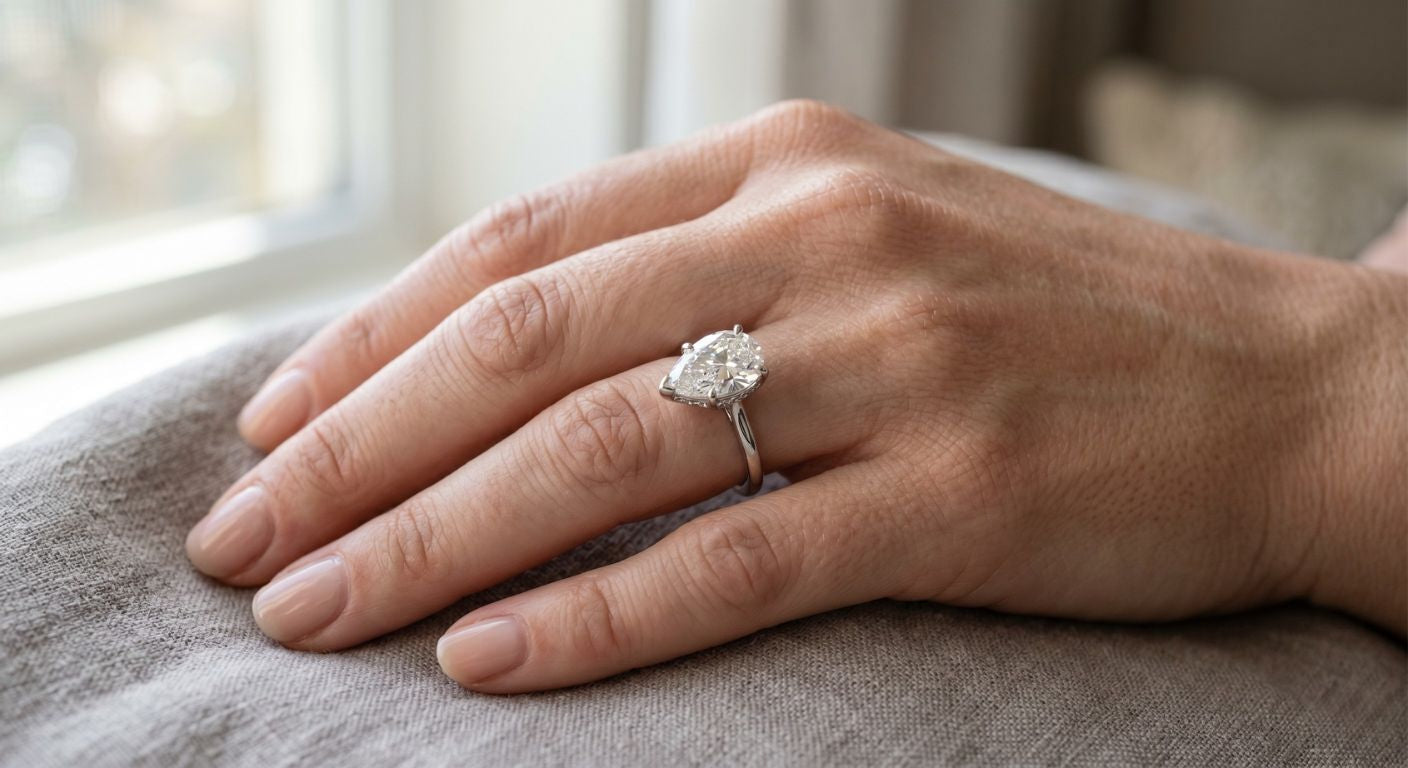
If you are searching for a diamond shape that looks larger than it actually is, makes fingers look longer and more elegant, and carries a certain romantic softness that rounds do not quite have, the pear shape is worth a serious look. A 1 carat pear shape diamond ring is one of the most visually impressive choices at this size, thanks to the elongated silhouette that spreads beautifully across the finger. I'm Chintan Dhola, co-founder at GiliBili and a diamond manufacturing expert with 12+ years in diamond grading and production and pear shapes are one of my personal favourites to work with.
In this guide, I will walk you through everything: how big a 1 carat pear actually looks on your hand, what it costs in 2025, the settings that suit it best, and the buying traps I want you to avoid. Lab-grown pear diamonds at this weight start from around $1,500 to $2,000 for a complete ring in 14K or 18K gold, which makes this a smart entry into genuinely impressive diamond jewelry.

A 1 carat pear shape lab diamond typically measures around 8 x 5 mm, though the exact dimensions shift based on the length-to-width ratio you choose. The elongated teardrop silhouette means it covers more finger surface than a round of the same weight, often looking closer in visual spread to a 1.2 or 1.3 carat round diamond.
Here is what makes pear shapes so interesting from a manufacturing perspective: the way the stone is cut affects everything. A pear has a rounded bottom and a pointed tip, and the balance between those two ends changes how it sits on the finger and how the light moves through it.
The length-to-width (L/W) ratio matters a lot. For most buyers, a ratio between 1.45 and 1.75 hits the sweet spot.
The pointed tip is oriented toward the hand when worn, so that elegant length is what you actually see from above. On a standard UK size L or US size 6 finger, a 1 carat pear looks genuinely substantial.
A premium quality 1 carat pear shape lab diamond ring set in 14K or 18K gold, with IGI certification and D–F colour, VS–VVS clarity, Excellent cut, and no fluorescence, will typically cost between $1,500 and $2,000 USD (£1,230 to £1,640 GBP). The final price shifts based on your metal choice, setting style, and the specific proportions of the stone.
Let me break down the four things that move the price.
1. The 4Cs What Matters Most for Pear Shapes
At GiliBili, we work exclusively with the top tier of the grading scale for lab diamonds:
These aren't luxury upgrades. They are the baseline you should expect when buying a pear shape diamond, because cut quality and symmetry in a pear directly control whether you get sparkle or dullness.
2. Lab-Grown vs Natural Diamond Price
A natural 1 carat pear of equivalent quality (D–F, VS–VVS, Excellent cut, IGI or GIA certified) would typically run $5,000 to $8,000 or more. A lab-grown diamond gives you the same physical, chemical, and optical properties at a fraction of that cost. The savings are real and significant and the diamond is real too.
3. Metal Choice
The ring setting adds to the price. A 14K gold solitaire setting is more affordable than 18K, and both are available at GiliBili. Platinum is also an option for custom orders.
4. Setting Complexity
A plain solitaire costs less than a halo or pavé band. More diamonds in the setting means more labor and material cost. We will cover settings in detail below.
This table will help you see where the 1 carat sits relative to adjacent sizes and what you get for each step up.
|
Carat Weight |
Typical Dimensions (mm) |
Estimated Price Range (USD) |
Lifestyle Fit |
|
0.75 ct |
~7 x 4.5 mm |
$1,100 – $1,400 |
Delicate and understated, suits slim fingers well |
|
1.0 ct |
~8 x 5 mm |
$1,500 – $2,000 |
The ideal balance visible presence without going bold |
|
1.5 ct |
~10 x 6 mm |
$2,000 – $2,500 |
Statement size, beautiful spread, noticeable from across the room |
|
2.0 ct |
~11.5 x 7 mm |
$2,500 – $3,000 |
Showstopping genuinely big on any finger size |
One thing buyers often don't realise: price does not climb in a straight line as carat weight increases. The jump from 1ct to 1.5ct is relatively smooth, but above 2 carats, each weight tier commands a larger premium per carat. This is why the 1 carat pear is considered exceptional value you get genuine visual impact at a price point that feels accessible.
If you are comparing across our 2 carat diamond ring collection or 3 carat diamond ring collection, this table gives you a clear sense of the visual and financial jump between each tier.

The most important thing to check in a pear shape diamond before you look at anything else is whether the stone has a bow-tie effect. This is a dark, shadow-like zone that runs across the middle of the stone and kills the brilliance. Not all pear shapes have it, and it cannot always be detected from a grading report alone. Always request a video of the stone in multiple lighting environments before buying.
Here are my four essential tips when buying a 1 carat pear shape lab diamond:
1. Check for the Bow-Tie Effect A poorly cut pear will show a dark bow-tie shadow across its widest point. A well-cut stone eliminates or minimises this. Always watch a video still photos can hide it. At GiliBili, we review every stone's light performance before recommending it.
2. Protect the Pointed Tip The tip of a pear shape is its most vulnerable point. It can chip if knocked sharply against a hard surface. A V-prong or bezel-set tip provides real protection. If your lifestyle is hands-on (you cook, garden, exercise), discuss tip protection with your jeweler.
3. Insist on Excellent Cut Only The cut grade on a pear shape diamond is everything. A poorly proportioned pear even with perfect color and clarity will look dull. An Excellent cut pear in D color and VS clarity will outperform a lower-cut stone at any price.
4. Choose the Right L/W Ratio for the Hand Show your jeweler a photo of your hand. A longer, slimmer finger can carry a more elongated pear (1.65–1.75). A wider or shorter finger often looks better with a slightly shorter, rounder pear (1.50–1.60). This is a detail most buyers skip and it makes a big difference in the final look.
5. Verify IGI Certification with Laser Inscription Every solitaire pear shape diamond you buy should come with an IGI certificate and a laser-inscribed girdle. The inscription ties the physical stone to its grading report permanently. Do not buy without it. Learn more about why certification matters on the IGI website.
The right setting transforms a beautiful stone into a complete piece of jewelry. A 1 carat pear shape diamond suits several styles particularly well, and your choice of setting will affect both appearance and how the ring wears over time.
Solitaire - Clean, Timeless, and Always Right A solitaire lets the pear shape do all the talking. Nothing competes with the stone. A four or five-prong solitaire with a V-tip is the most popular choice for this shape. It is also the easiest to resize and the simplest to maintain. Browse our pear diamond engagement rings collection to see what a well-crafted solitaire looks like at different band widths.
Halo - Maximum Visual Impact A halo of smaller round diamonds encircles the pear center stone, adding perceived size and brilliance. A 1 carat pear in a halo can look visually similar to a 1.5 carat stone without the extra cost. The halo also protects the pointed tip slightly, which is a bonus for active wearers. Explore our halo rings collection.
Three-Stone - Past, Present, Future Two side stones flanking your pear center add both symbolism and sparkle. Common pairings include small rounds, tapered baguettes, or matching pear shapes as side stones. The three-stone setting gives the ring more presence on the finger without increasing the center stone size. See our three stone ring collection.
East-West Setting - The Modern Choice Setting the pear horizontally (east-west) rather than tip-up is a contemporary look that has become increasingly popular. It gives the ring a wide, architectural appearance and can look especially striking on longer fingers.

At GiliBili, we can build your 1 carat pear shape engagement ring entirely from scratch. We source the loose lab diamond first selecting the specific stone that fits your preferred dimensions, ratio, and light performance and then design the setting around it through CAD before handcrafting the final piece.
Here is what our custom process includes:
Whether you have a clear design in mind or just a vague inspiration, we guide you through the full process. Visit our custom jewelry page to get started, or browse the engagement rings collection for design inspiration.
Is a 1 carat pear shape diamond ring too big for everyday wear?
Not at all. A 1 carat pear sits low enough to be worn comfortably every day, especially in a solitaire or low-profile bezel setting. The key is choosing a setting that protects the tip. Most buyers tell us it feels lighter and more comfortable than they expected, given how impressive it looks.
Does a pear shape diamond look bigger than a round of the same carat weight?
Yes, consistently. A 1 carat pear typically covers about 10–15% more surface area on the finger than a 1 carat round brilliant, due to its elongated shape. This is one of the main reasons buyers choose pear you get more visible presence per dollar spent. A 1 carat round measures roughly 6.5mm in diameter, while a 1 carat pear spans about 8mm in length.
What is the ideal finger size for a 1 carat pear diamond?
A 1 carat pear looks flattering on most finger sizes. On slimmer or shorter fingers, it can look quite bold in a good way. On wider fingers, you might consider a slightly longer L/W ratio (1.65 and above) to complement the finger shape. Use our ring size guide to find your size before ordering.
Should the point face in or out when wearing a pear ring?
Traditionally, the pointed tip faces toward the fingernail (outward), which extends the visual length of the finger. Some people wear it pointing inward for comfort and personal preference. Neither is wrong it comes down to which orientation you prefer when you try it on.
Is lab-grown pear diamond the same as natural?
Yes. A lab-grown pear shape diamond is physically, chemically, and optically identical to a natural one. The only difference is origin one forms underground over millions of years, the other is grown in a controlled environment in weeks. Both are real diamonds. IGI certifies both with the same grading standards. For more detail on lab diamonds, see our lab grown diamond guide.
How do I care for a pear shape diamond ring?
Clean it gently with warm water, mild dish soap, and a soft brush every few weeks. Have it professionally checked once a year to make sure the prongs holding the tip are secure. The pointed tip prong is the one that takes the most stress over time. Full care instructions are on our jewelry care page.
A 1 carat pear shape diamond ring sits in a genuinely sweet spot. It gives you real visual impact, a romantic and elegant silhouette, and the kind of presence that people notice all at a price range that is accessible when you choose lab-grown. Between $1,500 and $2,000 for a complete ring in 14K or 18K gold, it is hard to find better value in fine diamond jewelry.
If you are looking at the next size up, our 2 carat diamond ring collection and 1 carat diamond ring collection are good places to compare. And if you want to go further with a custom design, we are ready to help.
Reach out to us directly we respond fast and we love talking about diamonds.
WhatsApp: +91 8200212331 (instant reply) Email: hello@gilibili.com
We help with loose lab diamonds, custom jewelry, engagement rings, and fancy color diamonds. Whatever stage of the process you are at, we are happy to guide you.


