Cart
0
Checking your FREE GIFT offer...


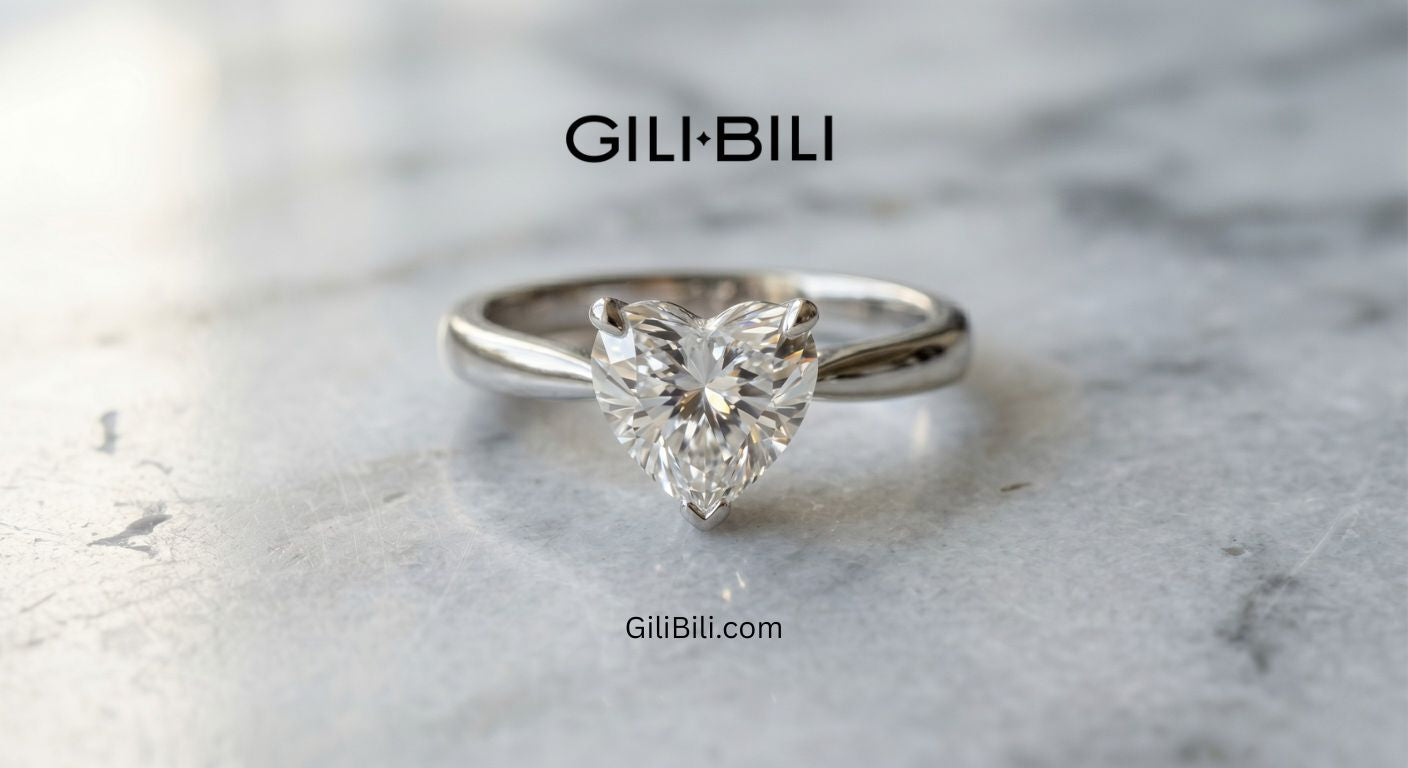
A 1 carat heart shape diamond ring is one of the most romantic choices you can make. There's really no other shape that communicates love quite so directly. But it's also one of the trickier shapes to buy well, and the price can vary quite a bit depending on quality and where you shop.
I'm Chintan Dhola, Co-Founder of GiliBili and a diamond professional with 12+ years of hands-on experience in diamond manufacturing and grading. In this guide I'm going to walk you through exactly what a 1 carat heart diamond looks like on the hand, what you should expect to pay for a high-quality lab-grown version, and the specific buying tips that will save you from the most common mistakes people make with this shape.
A well-made 1 carat heart diamond ring in IGI-certified lab-grown quality starts at around $1,500 to $2,000 in 14K or 18K gold. Let's dig into the details.

A 1 carat heart shape diamond typically measures around 6.5 mm x 6.5 mm. Because heart diamonds are cut with a wider spread than rounds, they can actually appear slightly larger face-up than a 1 carat round brilliant of the same weight. For reference, a 1 carat round diamond measures roughly 6.4 mm across, so the visual difference is subtle but real.
The ideal length-to-width ratio for a heart diamond sits between 0.98 and 1.02, meaning it should look like a balanced, symmetrical heart not too elongated and not too wide. Ratios outside this range start to look distorted, and that's something you want to avoid, especially in a smaller carat like 1 ct where proportions are more visible.
The two lobes at the top should be even and round, the cleft at the center should be sharp and well-defined, and the point at the bottom should come to a clean, crisp tip. These three elements are what separate a beautiful heart diamond from an average one.
Keep in mind that heart shapes can vary significantly in visual quality even within the same carat weight and grade. The shape is cut by hand by a skilled craftsman, and the artistry matters enormously.
A top-quality 1 carat heart shape lab-grown diamond engagement ring in 14K or 18K gold is priced between $1,500 and $2,000 USD (approximately £1,230 to £1,640 GBP). That covers a premium D-F color, VS-VVS clarity, Excellent cut, IGI-certified diamond set in a well-crafted gold ring.
The price depends on four main factors, which jewelers call the 4Cs:
Color: At GiliBili, we only work with D, E, and F color diamonds. These are the top colorless grades, which means your heart diamond will look completely icy and bright with no yellowish or brownish tint. Color is especially important in a heart shape because the large flat facets near the lobes can show color more easily than a round brilliant.
Clarity: We recommend VS to VVS clarity for heart shape diamonds. VS2 and above are eye-clean, meaning you won't see any inclusions without magnification. The point at the bottom of a heart diamond is more susceptible to chipping, so avoiding stones with inclusions near the tip is important for both beauty and durability.
Cut: Heart diamonds don't have a standardized cut grade like rounds do. IGI certification will confirm the proportions, but you need to look carefully at symmetry, lobe balance, and cleft sharpness. A poorly cut heart will lose sparkle.
Certification: All solitaire diamonds at GiliBili are IGI certified with a laser inscription on the girdle so you always know exactly what you're getting.
Lab-grown vs. natural diamonds: A natural 1 carat heart diamond of equivalent D-F / VS-VVS quality would typically cost $8,000 to $12,000 or more. Lab-grown diamonds are physically, chemically, and optically identical to natural diamonds they are simply grown in a controlled environment rather than mined. This allows us to offer far better value without compromising on quality.
|
Carat Weight |
Typical Dimensions |
Estimated Price Range (USD) |
Lifestyle Fit |
|
0.75 ct |
~5.8 x 5.8 mm |
$1,100 – $1,400 |
Delicate, understated, suits petite fingers |
|
1.0 ct |
~6.5 x 6.5 mm |
$1,500 – $2,000 |
Sweet spot: visible, balanced, wearable daily |
|
1.5 ct |
~8.0 x 8.0 mm |
$2,000 – $2,500 |
Noticeably bold, great for statement ring lovers |
|
2.0 ct |
~9.0 x 9.0 mm |
$2,500 – $3,000 |
Eye-catching, center-stage, needs a protective setting |
Price increases aren't linear as you go up in carat weight. The jump from 1 ct to 1.5 ct is more significant than the raw number suggests because a larger rough diamond is rarer to find in premium color and clarity grades. The quality premium stacks on top of the weight premium.
For most people, the 1 carat range sits in exactly the right place: noticeable without being overwhelming, and genuinely affordable in lab-grown quality.

Choosing the right heart diamond takes a little more care than choosing a round or cushion. Here are the five things I always tell my customers before they buy.
1. Symmetry is everything. A heart diamond must be perfectly symmetrical. If one lobe is slightly larger or flatter than the other, the ring will never look quite right. Ask to see the diamond from directly above both sides of the heart should mirror each other exactly.
2. Check the cleft. The V-shaped cleft between the two lobes should be clean and well-defined. A shallow or soft cleft makes the diamond look more like a rounded shape than a heart. This is one of the most common quality issues I see in heart diamonds.
3. Protect that tip. The pointed bottom of a heart diamond is its most vulnerable part. If the setting leaves the tip exposed, it can chip over time, especially during daily wear. Always choose a setting that includes a V-prong or a claw that wraps around the tip specifically.
4. Don't go below VS2 clarity. Inclusions near the tip of a heart diamond are doubly problematic they weaken the point and they are harder to hide with prongs. Stick to VS2 or better for a heart shape.
5. Verify the length-to-width ratio. Ask for the exact measurements before you buy. A ratio between 0.98 and 1.02 gives you the most balanced, recognizable heart outline.
Solitaire: A classic four or five prong solitaire is the most elegant choice for a heart diamond. It keeps the focus entirely on the shape. Make sure one of those prongs is a V-prong at the tip. Browse our heart diamond engagement rings collection to see our solitaire options.
Halo: A halo of small round diamonds around the heart adds visual size and protects the edges of the diamond. It's a particularly good choice for a 1 carat stone because the halo makes it look noticeably larger on the finger. See our full halo rings collection for inspiration.
Three-Stone: Pairing a heart center with two side stones round brilliants or pear shapes creates a stunning, balanced look. The three stones together symbolize past, present, and future, which pairs beautifully with the romantic heart shape. You can explore three-stone ring styles in our collection.
Pave Band: A solitaire heart diamond set on a diamond pave band adds sparkle along the shank without distracting from the center. This is one of our most popular configurations. Check our pave rings collection for reference.
One setting style to be more careful with is a bezel setting. A full bezel around a heart diamond can hide the outline of the shape and reduce the sparkle significantly. If you love the clean look of a bezel, opt for a half-bezel that leaves the lobes open.

At GiliBili, we source our heart shape lab-grown diamonds directly and work with each customer to find the exact stone that matches their vision. Here is how our custom process works:
We start with the loose diamond. You tell us the carat weight, color, and clarity you want, and we source the best available heart shape stone in that range. Every solitaire diamond is IGI certified with a laser inscription.
From there, our design team creates a CAD rendering of your ring so you can see exactly how it will look before we make a single cut. You can choose from 14K or 18K gold in white, yellow, or rose, or 925 silver for a more budget-conscious option.
Once approved, our craftsmen hand-build the ring. We inspect every piece before it ships.
All orders come with:
Visit our custom jewelry page to learn more about the process, or browse our engagement rings collection to see ready-to-ship designs.
Is a 1 carat heart shape diamond too small to see the shape clearly?
No a 1 carat heart diamond at roughly 6.5 mm across is large enough for the heart shape to be clearly visible. The cleft and lobes are distinct and recognizable. Below 0.70 carats, the shape can start to look less defined, but at 1 carat you won't have this problem.
Does a heart diamond look bigger than a round diamond of the same carat?
Yes, slightly. Heart diamonds have a wider spread relative to their weight compared to rounds, so they tend to face up a little larger. A 1 carat heart appears slightly larger face-up than a 1 carat round brilliant, making it a smart choice for buyers who want visible size without increasing carat weight.
What finger size looks best with a 1 carat heart diamond ring?
A 1 carat heart shape flatters most finger sizes. On a petite finger (size 4-5 US), the 6.5 mm stone makes a lovely, proportionate statement. On a larger finger (size 7+), you might consider stepping up to 1.5 carats for better balance. Use our ring size guide if you are unsure of your size.
Which metal looks best with a heart shape diamond?
White gold and platinum are classic choices because they make a colorless D-F diamond look its brightest and iciest. Yellow gold adds warmth and contrast that some people love for a romantic heart shape. Rose gold has become very popular with heart diamonds because of the feminine, romantic aesthetic it creates.
Is a heart diamond hard to wear every day?
The tip can be vulnerable if the setting doesn't protect it. Choose a setting with a dedicated V-prong at the point and you can wear it comfortably every day. I'd also recommend removing the ring during heavy manual work, gym sessions, or gardening the same advice I'd give for any fine jewelry piece.
Is a lab-grown heart diamond certified the same way as a natural one?
Yes. IGI (International Gemological Institute) certifies lab-grown diamonds using the exact same 4Cs grading standards as natural diamonds. Every solitaire lab diamond from GiliBili comes with an IGI certificate and a laser inscription on the girdle for traceability. You can learn more about IGI certification standards on the IGI website.

The heart shape is unambiguous in what it represents. There's a reason it's been a symbol of love for centuries. And at 1 carat, you're in the range where the shape reads clearly on the finger, the price is genuinely accessible in lab-grown quality, and the diamond will hold its beauty for a lifetime.
A D-F, VS-VVS, Excellent cut, IGI certified 1 carat heart diamond ring in 14K or 18K gold from GiliBili is priced between $1,500 and $2,000 a fraction of what the equivalent natural diamond would cost, with zero compromise on beauty or quality.
If you are ready to start exploring, browse our heart diamond engagement rings or take a look at our 1 carat diamond ring collection to see what's available right now.
For personalized help, reach out directly:
WhatsApp: +91 8200212331 (instant reply) Email: hello@gilibili.com
We help with loose lab diamonds, custom jewelry design, engagement rings, wedding bands, and fancy color lab diamonds. Whatever you have in mind, we're happy to guide you through it.


