Cart
0
Checking your FREE GIFT offer...


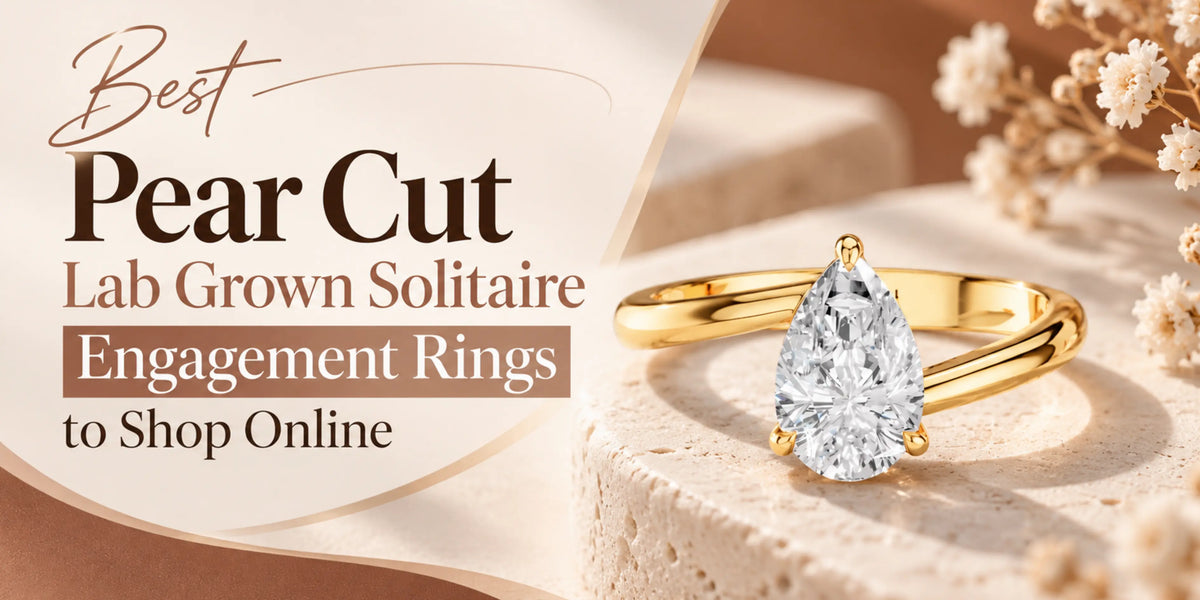
The pear cut combines a round brilliant's sparkle with a tapered, teardrop outline, and on a solitaire ring that shape does a lot of the design work for you. Its elongated silhouette tends to lengthen the look of a finger, and because it can be set pointing along the hand or sideways across it, one diamond shape can produce very different rings.
This guide looks at eight GiliBili lab grown pear solitaire engagement rings, using prices and specifications from the product pages checked in October 2026. They include bypass, wave, wavy, east-west, twisted and bezel designs. Every ring lists a D-E color, VVS/VS clarity center diamond with an IGI certificate, and all eight start between $400 and $475 in 925 silver.
The best pear solitaire depends on the band and setting you want. For the lowest price, the Pear Bypass Prong, Modern Wavy Pear and East West rings all start at $400. For a protected, low-profile pear, choose the Modern Pear Bezel ($430) or Pear Leaf Bezel ($475). In 925 silver, six of the eight rings reach 1.50 CT for under $1,000, while gold versions start above $1,000.
A pear diamond is round at one end and pointed at the other. Pear shapes can be slimmer or plumper, and the proportions change how traditional or modern a ring looks. Many shoppers also check how the stone looks in photos or video, since some pear diamonds show a darker bow-tie area across the middle. If the proportions matter to you, ask for extra photos or a video before ordering.
Most pear rings point the tip along the finger, which is the classic look and the one that most emphasizes length. An east-west setting turns the stone sideways, which feels more modern and fashion-led. One ring in this guide, the East West Pear, uses this layout.
Because a pear solitaire has only one diamond, the band often defines the design. A bypass band curves past itself and wraps around the center stone. A wave or wavy band uses flowing contours, and a twisted band adds a woven, rope-like texture. A bezel ring keeps the band simple and puts the emphasis on the metal frame around the diamond.
Prongs hold the diamond with small metal claws and leave more of the stone open to light. A bezel surrounds the diamond with a smooth metal rim for a lower profile. The pear's point is its most exposed part, so many buyers prefer a bezel when the ring will be worn every day. The Modern Pear and Leaf Bezel rings in this guide are bezel set.
The listed center sizes in this guide run from about 0.50 CT to 2.00 CT. Pear cuts have a long face-up outline, so they can look larger than their carat weight suggests, though proportions vary from stone to stone. Compare the listed carat size with the price for the exact variant rather than relying on weight alone.
All eight product pages list the center diamond as D-E color and VVS/VS clarity, with an IGI diamond certificate. Because the grading is the same across the group, you can focus on shape, band, setting, metal and size.
GiliBili's starting prices are for 925 sterling silver. Gold costs more: across these rings, the lowest 14K gold starting price is $1,015 and 18K gold starts higher. Sterling silver is softer than gold and can darken over time, though GiliBili notes that a polishing cloth restores it. For many buyers, silver is a sensible way to choose a larger pear within a fixed budget.
The rings below follow the order of the product list supplied for this guide. Prices and specifications reflect the GiliBili product pages checked while preparing this article and may change over time.
Two curved band ends sweep past each other and wrap around a prong-set pear. It has the lowest starting price in the group and the most affordable 1.00 CT option, which makes it a natural baseline when comparing the other pear designs.
Best forShoppers who want a pear solitaire with a modern bypass band at the lowest entry price.
View ProductThe band swells to about 3.5 MM and tapers to 2.0 MM in a wave-like contour. That gives the pear a visible, sculpted base and makes this the boldest band in the selection.
Best forAnyone who wants a more architectural band under a teardrop center.
View ProductA second pear bypass design, with a slightly wider 1.90 MM shank and flowing, sweeping lines. Putting it next to the Pear Bypass Prong ring shows how much a 0.20 MM change in band width alters the balance of the ring.
Best forPear fans who like the bypass idea and want a little more band presence.
View ProductA softly flowing wavy band leads up to a prong-set pear. It is a lighter, more fashion-forward take on the wave idea than the Pear Shaped Wave ring, and it shares the $400 entry price.
Best forBuyers who want curves in the band without the extra width of a sculpted wave.
View ProductThe pear lies sideways across the finger instead of pointing along it. That east-west orientation is the biggest style departure in this list, and the 1.60 MM shank keeps the whole look slim and minimal.
Best forAnyone who wants a pear solitaire that looks different from the usual vertical setting.
View ProductA woven, twisted band adds depth and movement to the shank while the prong-set pear stays in the spotlight. The product page lists an overall width of about 9.5 MM, so it has more visual presence than a plain slim band.
Best forBuyers who like a rope-like twist and want texture in the band as well as brilliance in the stone.
View ProductA sleek bezel surrounds the entire pear, including the point. That makes it the most protected, minimalist option here, and it has the lowest 1.50 CT silver price of the three bezel and twist designs near $430.
Best forActive wearers and minimalists who want a smooth, low-profile pear with the tip fully enclosed.
View ProductThe bezel is shaped like a leaf, so the frame itself adds an organic detail rather than just holding the stone. It is the highest-priced starting ring in the group, but still sits under $500 for a 0.50 CT center in silver.
Best forShoppers who want a nature-inspired design with the security of a bezel.
View Product| Ring | Starting Price | Style | Setting | Listed Carat Range | Largest Silver Size Under $1,000 |
|---|---|---|---|---|---|
| Pear Bypass Prong | $400 | Bypass band | Prong | ~0.50–2.00 CT | 1.50 CT ($815) |
| Pear Wave | $460 | Wave band | Prong | ~0.50–2.00 CT | 1.00 CT ($785) |
| Pear Modern Bypass | $415 | Bypass band | Not listed | ~0.50–2.00 CT | 1.50 CT ($885) |
| Modern Wavy Pear | $400 | Wavy band | Prong | ~0.50–2.00 CT | 1.00 CT ($775) |
| East West Pear | $400 | East-west | Prong | ~0.50–2.00 CT | 1.50 CT ($870) |
| Pear Twist Band | $430 | Twisted band | Prong | ~0.50–2.00 CT | 1.50 CT ($895) |
| Modern Pear Bezel | $430 | Bezel | Bezel | ~0.50–2.00 CT | 1.50 CT ($840) |
| Pear Leaf Bezel | $475 | Leaf bezel | Bezel | ~0.50–2.00 CT | 1.50 CT ($875) |
In 925 silver, these eight rings all start under $500 for a 0.50 CT center. At 1.00 CT, prices run from $655 (Pear Bypass Prong) to $800 (Pear Leaf Bezel), so a full carat is realistic for most budgets.
At 1.50 CT, six rings stay under $1,000: Pear Bypass Prong ($815), Modern Pear Bezel ($840), East West ($870), Pear Leaf Bezel ($875), Pear Modern Bypass ($885) and Pear Twist Band ($895). The Pear Wave ($1,090) and Modern Wavy Pear ($1,165) move above $1,000 at that size. At 2.00 CT, every ring in the list is between $1,240 and $1,295 in silver.
Gold changes the picture. The lowest 14K gold starting price is $1,015 on the Pear Bypass Prong, Modern Wavy Pear and East West rings, and the other five start higher. Choose silver if you want the largest center for the money, or plan a higher budget if you prefer gold.
Several of the product pages state that GiliBili does not resize rings itself, so confirm your ring size with the brand's size guide before ordering.
Lab grown diamonds are real diamonds produced in a controlled laboratory environment. They are not diamond simulants such as cubic zirconia. GiliBili's product pages identify the center stones as lab grown, with D-E color, VVS/VS clarity and an IGI certificate.
For a solitaire, where one stone carries the whole design, that can mean a larger center or higher grades within the same budget. A 1.00 CT or 1.50 CT pear is within reach here, which would be harder at these prices with a mined diamond.
Choose a bypass band for movement and a classic pear silhouette. The Pear Bypass Prong and Pear Modern Bypass rings both use it, with a 1.70 MM and 1.90 MM shank respectively.
Choose a wave or wavy band for a more sculptural look. The Pear Wave has the wider, tapering band, while the Modern Wavy Pear is lighter.
Choose east-west if you want the pear on its side for a distinctive, modern outline. The East West Pear is the only ring here that does this.
Choose a twist band if you want texture in the shank. The Pear Twist Band lists an overall width of about 9.5 MM.
Choose a bezel for a protected, low-profile ring with the tip fully enclosed. The Modern Pear Bezel is the simpler option, and the Leaf Bezel adds an organic, leaf-inspired detail.
It depends on the look you want. This guide covers bypass bands, wave and wavy bands, an east-west setting, a twisted band, and two bezel designs, all with a pear-shaped lab grown center.
All eight GiliBili rings here start between $400 and $475 in 925 silver at 0.50 CT. At 1.00 CT in silver, prices run from $655 to $800. Gold versions cost more, with the lowest 14K gold starting price at $1,015.
Yes. Lab grown diamonds are diamonds produced in a controlled laboratory environment, not simulants such as cubic zirconia. Each product page lists the center stone as lab grown, D-E color and VVS/VS clarity, with an IGI certificate.
Six of the eight rings reach 1.50 CT in silver for under $1,000: Pear Bypass Prong ($815), Pear Modern Bypass ($885), East West ($870), Twist Band ($895), Modern Bezel ($840) and Leaf Bezel ($875). The Pear Wave and Modern Wavy rings reach 1.00 CT within that budget. At 2.00 CT, every ring is above $1,000 in silver.
An east-west setting places the pear horizontally across the finger instead of pointing along it. GiliBili's Pear Shape East West Setting ring uses this layout with a slim 1.60 MM shank.
Prongs expose more of the diamond to light, while a bezel surrounds the stone with metal for a smoother profile. The pear's point is its most exposed part, so a bezel can be a good choice if you want it fully enclosed. The Modern Pear and Leaf Bezel rings in this guide are bezel set.
The Pear Shaped Lab Grown Diamond Modern Engagement Ring and the Pear Shape Leaf Bezel Set Lab Diamond Engagement Ring. The other rings with a listed setting use prongs.
Yes. Each product page lists an IGI diamond certificate for the center stone.
It can be a practical choice. GiliBili states that its pieces are solid gold or sterling silver, never plated. Silver is softer than gold and can darken slightly over time, though a polishing cloth restores it. Many buyers use silver to get a larger diamond within budget.
Choose the metal, carat size and ring size on the product page, and review the price shown for that variant. If you have questions about proportions or a particular size, use the Ask an Expert option on the product page. GiliBili's pages also note that rings are not resized by the brand itself, so confirm your size first.
A pear cut solitaire can look classic, sculptural or strikingly modern depending on the band and setting. This GiliBili selection covers bypass, wave, wavy, east-west, twisted and bezel designs, all with a lab grown pear center listed as D-E color, VVS/VS clarity and IGI certified.
The main trade-off is metal and size. In 925 silver, you can reach 1.00 CT on every ring and 1.50 CT on six of them for under $1,000, while gold versions start above that mark. Choose the style that suits your taste first, then match the carat size and metal to your budget.
Before ordering, compare the exact metal, carat size, setting and current price of your preferred design. Product configurations and prices can change, so the product page should always be your final reference.
Ready to find your pear cut lab grown solitaire engagement ring?
Browse GiliBili Pear Engagement Rings


