Cart
0
Checking your FREE GIFT offer...


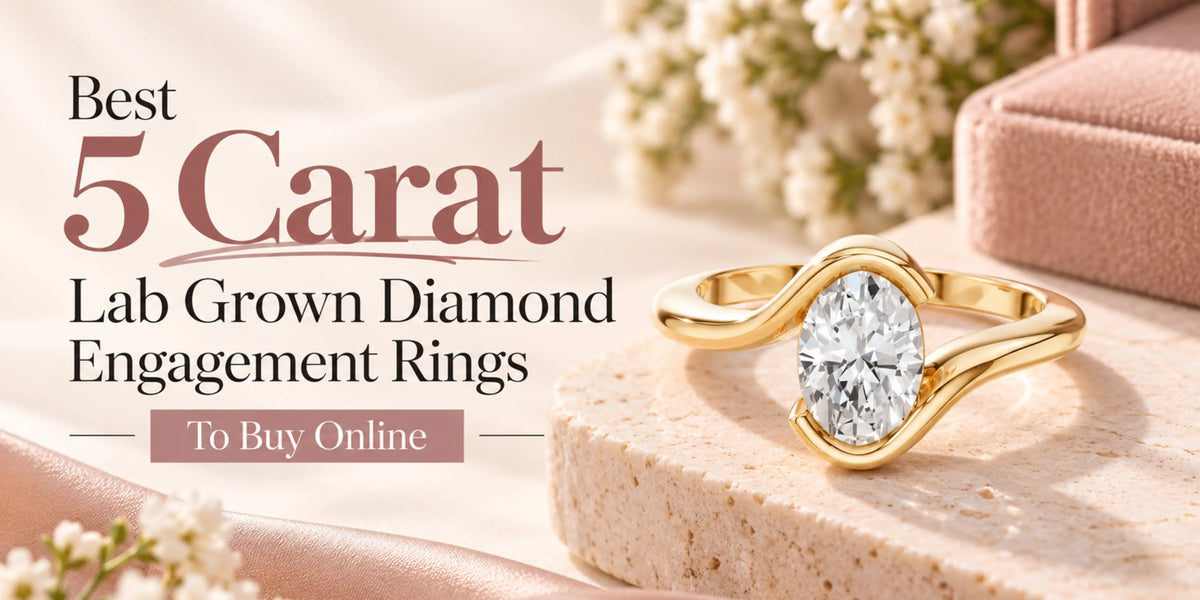
5 carats is the point where a diamond becomes the centerpiece of the entire ring - and the entire hand. It's a size mined diamonds rarely reach without a price tag in the hundreds of thousands, but lab-grown diamonds bring it within reach without giving up certification, brilliance, or authenticity.
This guide rounds up ten GiliBili engagement ring designs built around elongated center shapes - pear and oval - that are especially well suited to carrying five carats with grace. Each design ships in solid 14K or 18K gold as well as 925 silver, with a D-E color, VVS/VS clarity, IGI-certified lab-grown diamond at its heart.
At 5 carats, both the setting and the center shape matter more than at any smaller size. Pear and oval cuts spread carat weight across more visible surface area than round or square shapes, so they read even larger at this weight. Bezel and half-bezel settings (five of the ten designs below) offer the most protection for a stone this size, while pavé bands and hidden halos add extra sparkle around the center diamond. All ten designs here scale up to a 5 carat lab-grown diamond with an IGI certificate.
Five carats is roughly the ceiling most fine jewelry catalogs list for engagement rings, and it's a size where every design decision is amplified. A stone this large needs a setting engineered to hold and protect it - not a scaled-up version of a mount built for a much smaller diamond. It's also a size where shape choice has an outsized visual effect: an elongated pear or oval reads larger and more dramatic than a round stone of identical weight.
Color and clarity stay consistent across this collection at D-E and VVS/VS, which matters more than ever at 5 carats - both tint and inclusions become easier to notice as the stone grows.
Setting security. A 5 carat stone represents a serious investment sitting on an exposed part of the hand. Bezel and half-bezel settings wrap or partially wrap the stone's edge in metal for protection; prong and claw-prong settings expose more of the diamond to light but ask more of daily care.
Center shape. Pear diamonds combine a rounded end with a pointed tip; oval diamonds are fully elongated and symmetrical. Both shapes have the largest surface-area-to-carat ratio of common cuts, which is exactly why they dominate this list at 5 carats.
Band character. A center stone this size can carry a more distinctive band without looking overdone - a leaf-shaped bezel, a curved pavé half-band, or a flowing S-setting all give the ring a signature look instead of a plain shank.
Added sparkle details. A pavé band, an accent band of smaller diamonds, or a hidden halo tucked beneath the center stone all add brilliance around the main diamond without requiring a second large stone.
Metal choice. All ten designs are available in 925 silver as well as 14K and 18K gold in yellow, white, or rose. At 5 carats, gold's added durability is worth weighing seriously given the size and value of the center stone.
Certification. Every design ships with an IGI Diamond Certificate documenting the stone's carat weight, color, clarity, and cut - non-negotiable at this size.
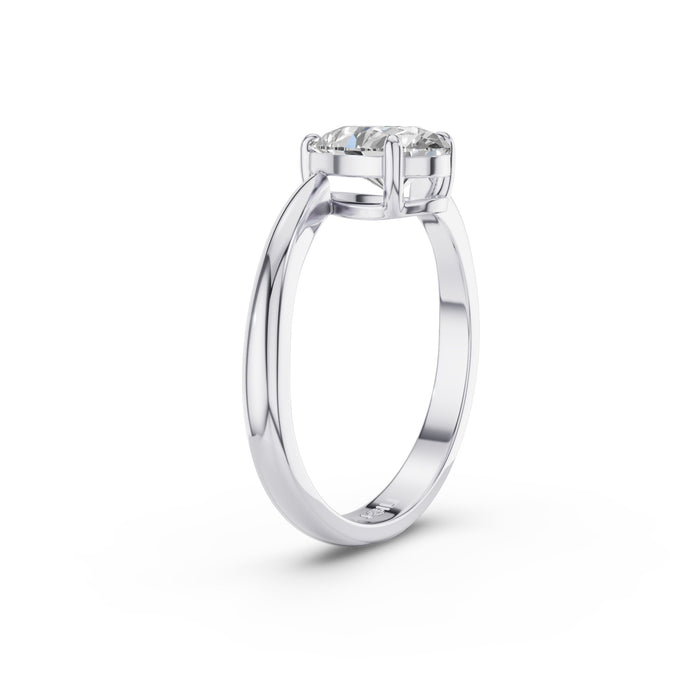
A pear-shaped center diamond combines a round cut's brilliance with a marquise's elongated point, set in a bypass band whose curved lines wrap around the stone. A grounded, classic-leaning entry point into pear shapes at this size.
Best forA dramatic pear silhouette in a design that still feels timeless.
View Collection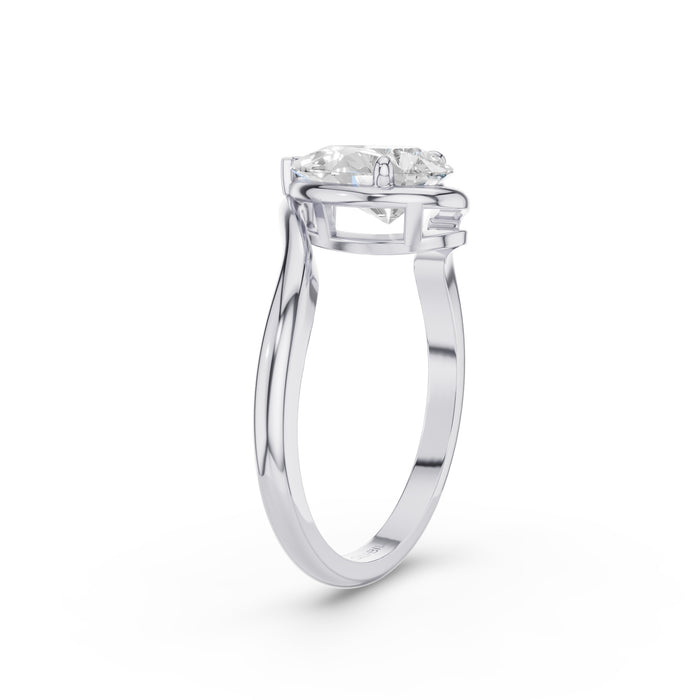
A second pear-shaped bypass option with a slightly wider 1.90mm shank for more presence at this carat weight, and a sleeker, more contemporary curve to the bypass lines than the classic version above.
Best forA pear-shaped bypass ring with a modern, streamlined feel.
View Collection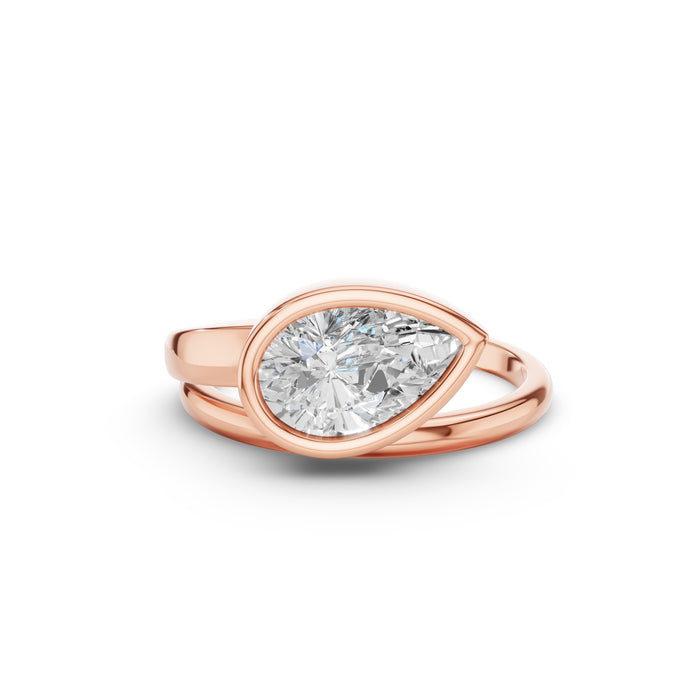
A nature-inspired, leaf-shaped bezel wraps the pear-cut center stone in smooth polished metal - the most protective setting for a pear diamond on this list, with an organic, artistic edge that sets it apart from a plain bezel.
Best forEveryday durability for a large pear stone, with a distinctive design detail.
View Collection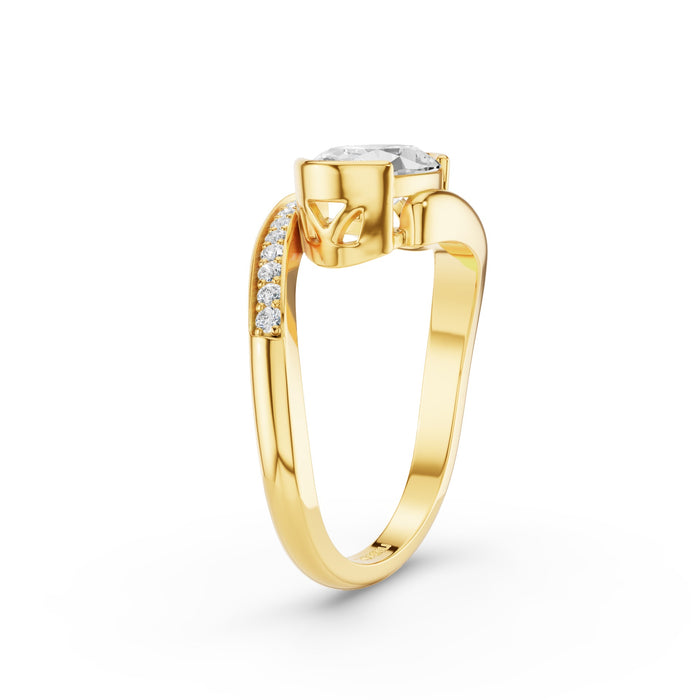
A graceful curved band studded with smaller round diamonds along half its length adds continuous sparkle beneath a large oval center stone, giving the ring fluid movement rather than a static straight shank.
Best forExtra brilliance along the band without a busy, fully-paved look.
View Collection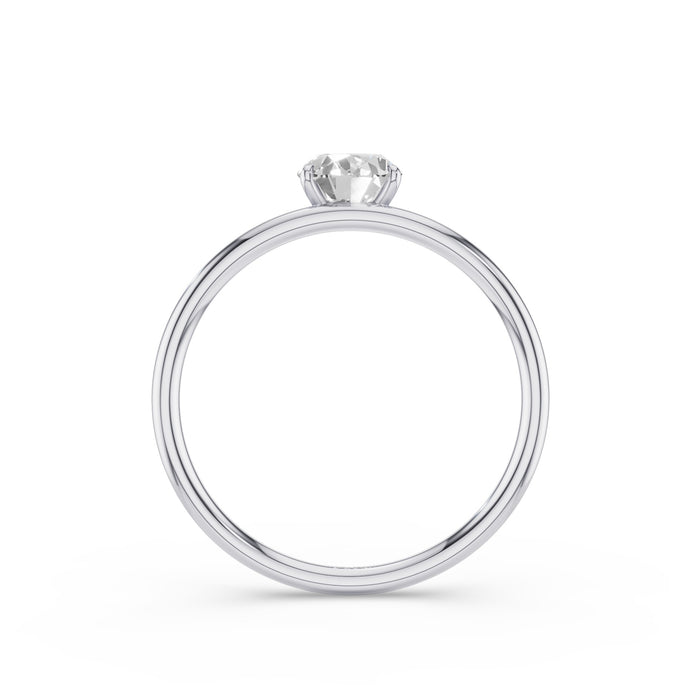
An open basket structure beneath the center stone lets light enter from every angle, maximizing brilliance in a classic solitaire silhouette - a strong pick when you want the oval diamond itself to be the entire story.
Best forMaximum brilliance in a timeless, unadorned solitaire.
View Collection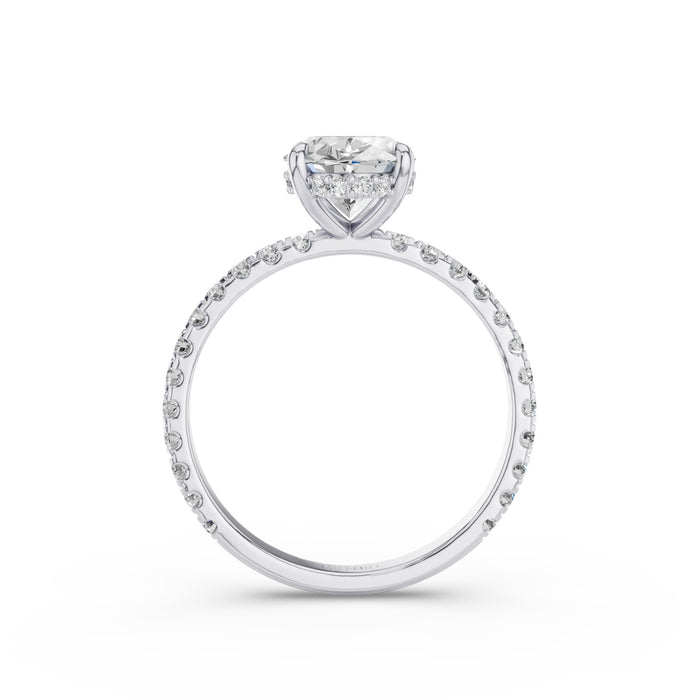
This design layers three sources of sparkle: the oval center stone, a pavé band studded with smaller lab-grown diamonds, and a hidden halo tucked beneath the center stone for extra brilliance from side angles.
Best forShoppers who want sparkle everywhere, not just from the center stone.
View Collection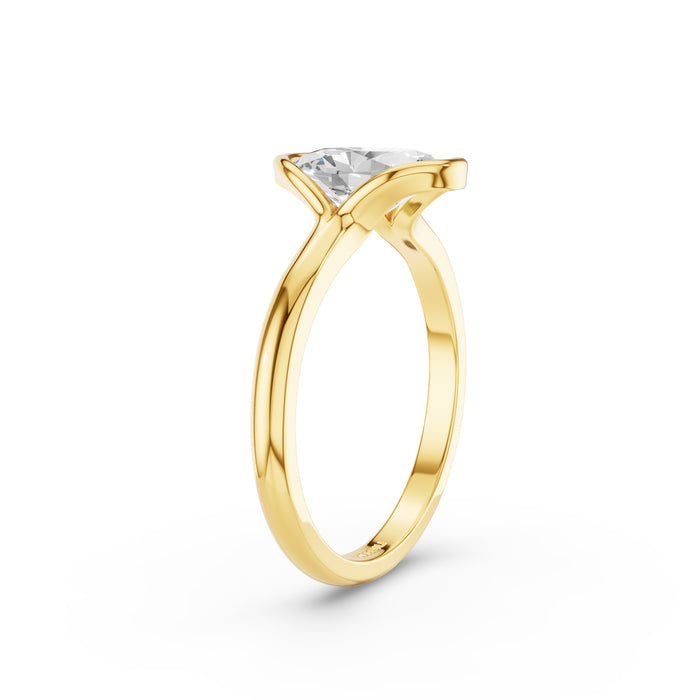
Polished metal partially wraps the center stone rather than fully encircling it, striking a balance between the light exposure of a prong setting and the protection of a full bezel - a practical middle ground for a stone this size.
Best forExtra security without fully covering the stone's profile.
View Collection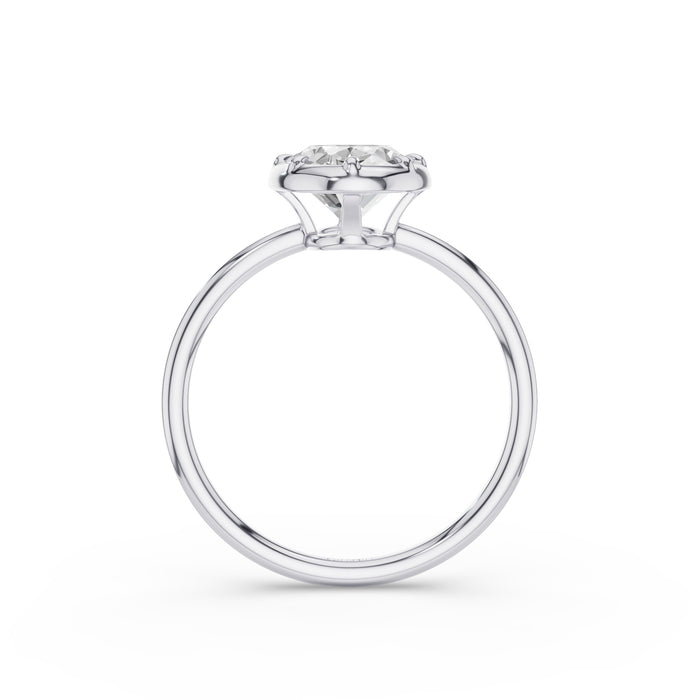
Delicate pointed claw prongs hold the center stone with a refined, minimalist look, maximizing light exposure to the diamond while keeping the setting itself understated against a large oval stone.
Best forA sleek, minimal setting that lets the diamond dominate visually.
View Collection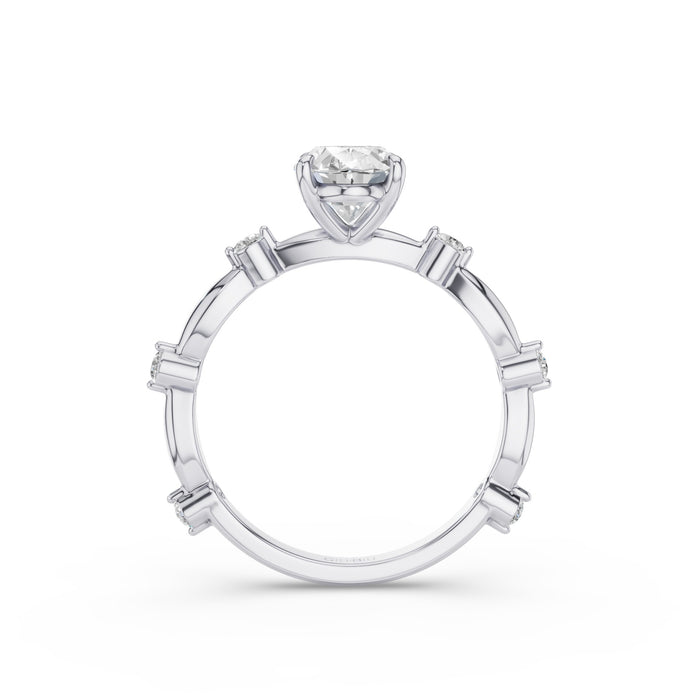
Small round diamonds run along the band beside the oval center stone, adding a subtle line of sparkle that complements the main diamond without competing with it for attention.
Best forA touch of extra brilliance along the shank in an otherwise classic design.
View Collection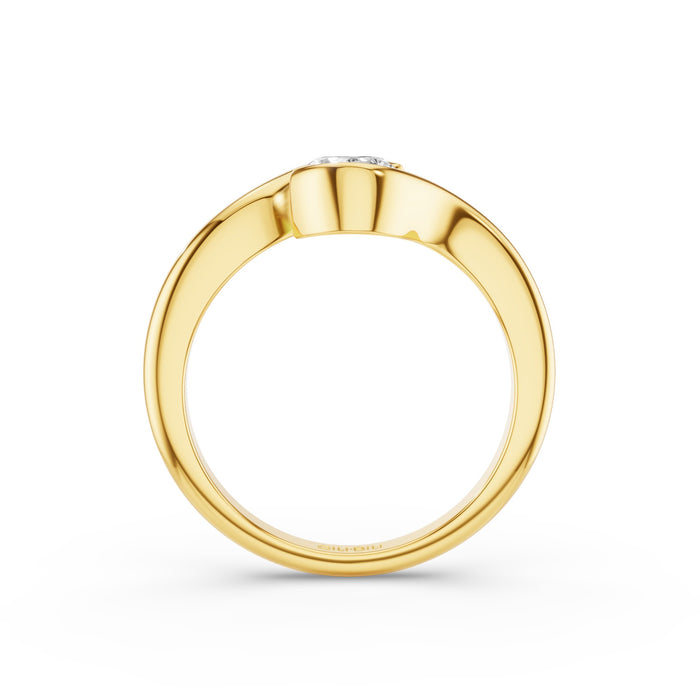
The metalwork curves into a flowing S-shape around the center stone, giving this design the most artistic, sculptural band on this list - a distinctive alternative to a straight shank at a size where the band has real presence.
Best forA large oval stone in a genuinely one-of-a-kind band design.
View Collection| Design | Center Shape | Setting | Distinguishing Detail |
|---|---|---|---|
| Bypass Prong | Pear | Prong (bypass) | Classic bypass band |
| Modern Bypass | Pear | Bypass | Wider, sleeker bypass |
| Leaf Bezel | Pear | Bezel | Leaf-inspired frame |
| Curved Half Pavé | Oval | Prong + half pavé | Curved pavé band |
| Basket Solitaire | Oval | Prong (basket) | Open basket structure |
| Pavé + Hidden Halo | Oval | Prong + pavé + halo | Layered sparkle |
| Half Bezel | Oval | Half Bezel | Partial protective frame |
| Claw Prong | Oval | Claw Prong | Minimalist pointed prongs |
| Accent Band | Oval | Prong + accent band | Diamond-lined shank |
| S Setting | Oval | Flowing S-shape | Sculptural curved band |
At 5 carats, the difference between setting types becomes more pronounced than at any smaller size. Full bezel settings, like the leaf-bezel pear ring above, offer the most protection by wrapping the entire stone edge in metal - ideal for daily wear. Half-bezel settings compromise between protection and light exposure, covering part of the stone's edge while leaving the rest open. Prong and claw-prong settings expose the most surface area to light, maximizing sparkle, but rely on prongs staying secure over years of wear at this weight.
Center shape also does real work at this size. Because pear and oval diamonds have the largest surface-area-to-carat ratio of common cuts, a 5 carat stone in either shape will visually read larger than a 5 carat round or cushion stone - part of why this list leans heavily on those two shapes.
For shoppers set on a statement-sized stone, lab-grown diamonds are what make 5 carats realistic in the first place. A mined diamond at this weight, in comparable color and clarity, would carry an extraordinary premium; a lab-grown stone delivers the same chemical, physical, and optical properties with full IGI grading at a fraction of that cost.
The real decision at this size is setting, not authenticity. A bezel or half-bezel setting is the safer long-term choice for a 5 carat stone worn daily; a prong or claw-prong setting rewards you with maximum sparkle but calls for closer periodic attention to make sure the prongs stay tight.
Yes. Lab-grown diamonds make a 5 carat statement stone achievable at a fraction of what a comparable mined diamond would cost, with identical chemical, physical, and optical properties and full IGI grading.
Full bezel settings offer the most protection for daily wear at this size, half-bezel settings offer a middle ground between protection and sparkle, and prong or claw-prong settings maximize brilliance but ask for more periodic attention.
Pear and oval cuts have a higher surface-area-to-carat ratio than round or square shapes, meaning the same carat weight is spread across a larger visible outline, making the stone appear bigger.
Yes. Lab-grown diamonds are chemically, physically, and optically identical to mined diamonds - the only difference is that they're grown in a controlled lab environment instead of formed underground. They're graded on the same color, clarity, cut, and carat scale by labs like IGI.
A full bezel wraps a smooth metal rim entirely around the stone's edge for maximum protection. A half-bezel covers only part of the stone's edge, offering a balance between protection and light exposure.
A hidden halo is a ring of small diamonds set beneath the center stone, adding sparkle from side angles while keeping the top-down view clean. At 5 carats it's a matter of preference - the center stone already carries significant presence on its own.
Yes. Every ring in this guide includes an IGI (International Gemological Institute) Diamond Certificate documenting the stone's carat weight, color, clarity, and cut.
14K and 18K gold are generally sturdier for a large, prominent stone worn daily than 925 silver, which is softer and shows wear faster over time. All the designs in this guide are available in both.
A claw prong setting uses slim, pointed prongs to hold the center stone, offering a more minimalist look than standard rounded prongs while still maximizing light exposure to the diamond.
Confirm the diamond's shape, color, and clarity are stated explicitly, check that IGI certification is included, review the sizing guide and return policy, and choose a setting suited to how the ring will actually be worn day to day.
At 5 carats, the diamond doesn't need help making a statement - the setting's job is to protect that statement and let it wear comfortably for years. Pear and oval shapes stretch the size even further, while bezel and half-bezel settings keep a stone this valuable secure through daily wear, and details like a pavé band, hidden halo, or sculptural S-setting let you add a signature touch around the center stone.
Start by deciding between pear and oval, then use the comparison table above to narrow down setting type and band character before you commit.
Ready to compare the full 5 carat collection?
View 5 Carat Diamond Ring Collection


