Cart
0
Checking your FREE GIFT offer...


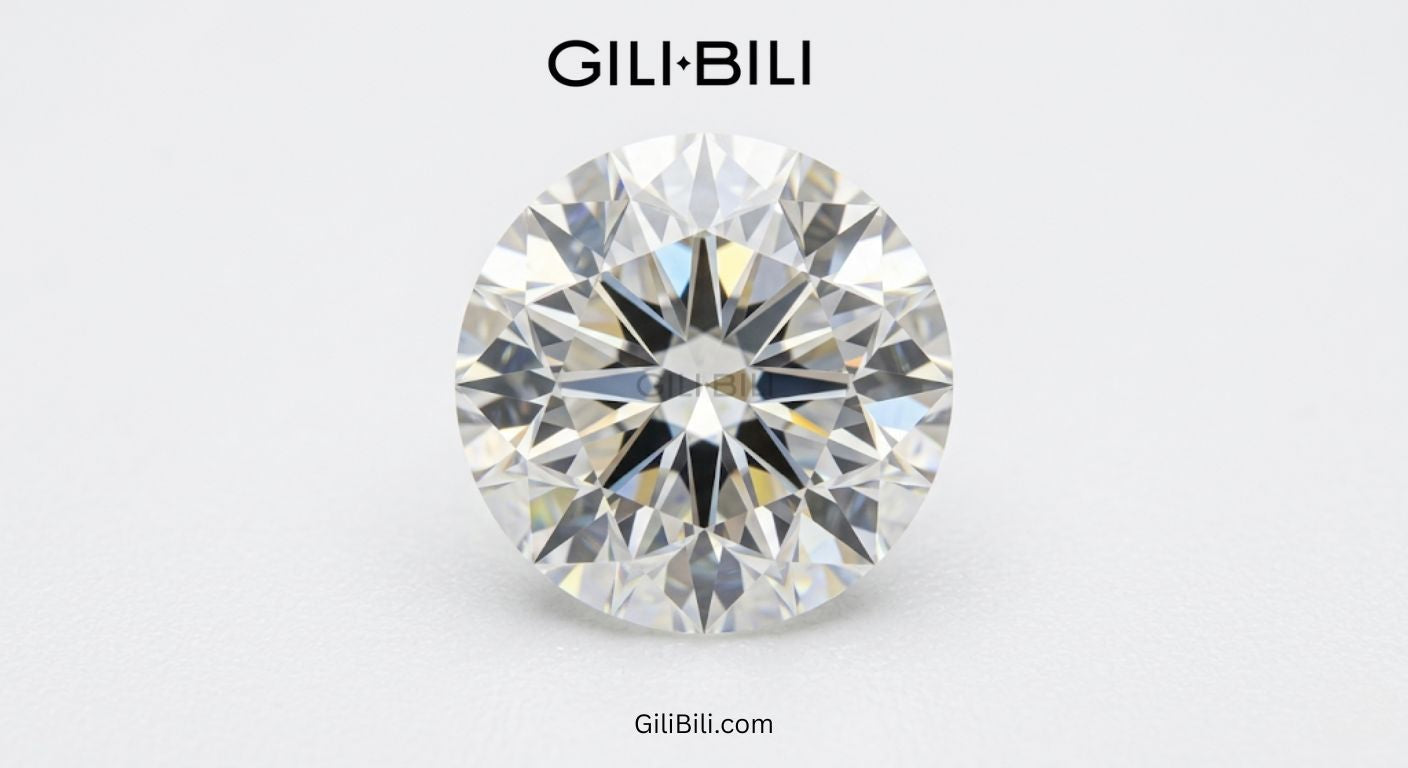
Choosing the best clarity for a 3 carat diamond is one of the most important decisions in the entire buying process and one of the most misunderstood. At 3 carats, the stakes are higher than at 1 carat. The diamond is larger, the facets are bigger, and inclusions that would be invisible in a smaller stone can become clearly visible to the naked eye.
I’m Chintan Dhola, Co-Founder and Chief Jewelry Expert at GiliBili.com. With over 12 years in diamond manufacturing and grading to IGI and GIA standards, I have inspected thousands of 3 carat lab-grown diamonds. I know exactly which quality combinations look extraordinary in real life and which ones look disappointing despite impressive numbers on a certificate. This guide gives you everything you need to make the right decision.
The short answer before we dive in for a 3 carat lab-grown diamond, the best cut is Excellent, the best clarity is VS1 or VVS2, and the color should be D to F. Let’s walk through exactly why, shape by shape.

At 1 carat, a diamond’s face measures about 6.5 mm. At 3 carats, that face is approximately 9.2 mm in a round brilliant 40 percent wider. That extra surface area does two things: it makes the diamond’s brilliance dramatically more visible in the best case, and it makes inclusions and cut defects significantly more visible in the worst case.
Think of it like a screen resolution. A low-resolution image on a small phone screen might look fine. Blow that same image up to a 60-inch television and every flaw becomes obvious. The same logic applies to diamond quality at 3 carats. Specifications that are acceptable at 1 carat can be genuinely problematic at 3 carats.
This is why the quality framework I recommend at GiliBili specifically for 3 carat diamonds is stricter than what many guides suggest for smaller stones. Cut and clarity deserve a higher standard at this size. Let’s go through each factor in detail.
The best cut grade for a 3 carat lab-grown diamond is Excellent always, without exception. Cut is the one quality factor that is entirely controlled by the craftsman who cuts the stone it is not a natural property of the diamond, it is a decision. And at 3 carats, that decision matters more than any other quality specification.
Here is why cut dominates everything else at this size: an Excellent cut diamond returns light back toward the viewer with maximum efficiency. Every facet is positioned at exactly the right angle to reflect light from entry to exit. The result is a diamond that blazes with fire and brilliance across its entire 9.2 mm face. A Very Good cut diamond at the same carat weight, color, and clarity will look noticeably less alive by comparison.
At GiliBili, Excellent cut is the only grade we offer. We do not offer Very Good, Good, or lower. Not because those grades are catastrophically bad, but because at the price point of a 3 carat ring, accepting anything less than Excellent cut is simply not good value. You are paying for a large, impressive stone you deserve one that performs at its absolute maximum.
IGI grades cut on round brilliant diamonds across five sub-factors: proportions, symmetry, polish, fire, and scintillation. An Excellent overall cut grade means the stone has achieved the highest ratings across these parameters. In practical terms, this means:
• The table percentage is ideally between 53 and 58 percent for a round brilliant
• The depth percentage sits between 59 and 62.5 percent
• The culet is either pointed (none) or very small a large culet creates a dark spot visible through the table
• Symmetry is Excellent meaning facets are perfectly aligned and the diamond is not off-centre or lopsided
• Polish is Excellent the surface of every facet is smooth, with no cutting wheel marks or polish lines visible
These specifications are why two Excellent cut diamonds can still look different in person. Within the Excellent range, stones in the tighter proportion ranges (depth 60.5–61.5%, table 54–57%) will produce more consistent light performance. At GiliBili, we hand-select stones within the Excellent range that meet our ideal proportion criteria.
IGI does not provide an overall cut grade for fancy shapes (oval, pear, emerald, cushion, marquise). For these shapes, you need to evaluate symmetry and polish grades separately, and assess the stone on video or in person for:
Explore our Diamond Shape Guide
• Bow-tie effect (oval, pear, marquise): a dark shadow across the centre of elongated shapes caused by light not reflecting back toward the viewer. Negligible in a premium cut. Look for this on video before buying.
• Extinction (cushion, radiant): dark patches in the diamond face. A well-cut cushion should have no dead zones when viewed face-up.
• Hall-of-mirrors vs. brilliance (emerald, asscher): step-cut shapes have a different light performance from brilliant cuts. The goal is clean, bold flashes of light rather than sparkle.
| Cut Grade | IGI Definition | Performance at 3 Carats | GiliBili Recommendation |
|---|---|---|---|
| Excellent | Highest proportions, symmetry, polish | Spectacular brilliance and fire | Always choose this |
| Very Good | Slightly outside ideal proportions | Good, but noticeably less alive | Acceptable minimum for tight budgets |
| Good | Outside optimal range | Visibly dull in comparison | Not recommended at 3 carats |
| Fair/Poor | Significantly outside optimal range | Lacks the brilliance expected | Never recommended at any size |
The best clarity for a 3 carat diamond is VS1 for brilliant-cut shapes (round, oval, pear, cushion) and VVS2 or better for step-cut shapes (emerald, asscher). Here is the reasoning behind that recommendation, and why clarity selection changes depending on the shape.
The IGI and GIA clarity scale runs from Flawless (FL) at the top to Included (I3) at the bottom. For a 3 carat lab-grown diamond, here is what each grade means in practical terms:
| Clarity Grade | What It Means | Visible at 3 Carats? | GiliBili View |
|---|---|---|---|
| FL / IF | No inclusions or surface flaws | No perfect | Beautiful but unnecessary premium |
| VVS1 | Extremely difficult to see under 10x magnification | No visually flawless | Excellent choice, premium quality |
| VVS2 | Very difficult to see under 10x magnification | No visually flawless | Excellent our top recommendation for step cuts |
| VS1 | Minor inclusions, not visible to naked eye | No visually clean | Our primary recommendation for brilliant cuts |
| VS2 | Minor inclusions, borderline naked-eye visibility | Possible in some shapes/positions | Acceptable if inclusions are at edges |
| SI1 | Noticeable inclusions under magnification | Often visible to naked eye at 3ct | Not recommended at 3 carats |
| SI2 | Obvious inclusions | Visible to naked eye at 3ct | Do not use at 3 carats |
| I1–I3 | Inclusions affect transparency and brilliance | Clearly visible | Never recommended |
The critical insight at 3 carats: VS2 is where the risk begins. A VS2 inclusion that sits toward the centre of the diamond’s table can be visible to the naked eye in certain lighting conditions, particularly in a 9.2 mm round or a step-cut shape. This is why VS1 is the minimum we recommend for brilliant-cut 3 carat diamonds, and VVS2 for step cuts where the open faceting acts as a magnifier.
This is the question I get most from buyers who are weighing up the VS1 vs VS2 3 carat diamond decision. The answer depends on three variables: the shape of the diamond, the type and position of the VS2 inclusion, and whether you are buying brilliant cut or step cut.
A VS1 clarity 3 carat diamond has minor inclusions that are not visible to the naked eye under any normal viewing condition. Even under a 10x loupe, the inclusions require some effort to locate. In a round brilliant or oval at this grade, the inclusion is often hidden by the brilliant faceting pattern the sparkle effectively conceals it. VS1 is the minimum I recommend without reservation for any 3 carat brilliant-cut shape.
VS2 at 3 carats is not automatically a bad choice but it requires more careful evaluation. A VS2 stone where the inclusion is a small feather or cloud located near the edge or girdle of the diamond can be perfectly eye-clean. A VS2 stone where the inclusion is a black crystal or knot positioned under the centre of the table is a different matter entirely. At 9.2 mm across, that inclusion can be visible to the naked eye without magnification.
This is why we never recommend buying a VS2 diamond at 3 carats without seeing the actual stone on video. The inclusion type, size, and position matter enormously at this clarity grade, and none of that information is on the certificate.
For brilliant-cut shapes (round, oval, cushion, pear), there is no visible difference between a VS1 and a VVS2 to the naked eye. Both are completely eye-clean. The VVS2 carries a modest price premium for a quality improvement that cannot be seen without magnification. For most buyers at 3 carats in a brilliant shape, VS1 is the sensible choice it delivers visual perfection without paying for invisible refinement.
For step-cut shapes (emerald, asscher), VVS2 is the minimum I recommend and VVS1 is worth considering. The open, hall-of-mirrors faceting of a step cut acts as a magnifying window into the interior of the diamond. An inclusion visible at 10x magnification in an emerald cut can appear visible in real-world lighting conditions because the faceting channels light straight through the stone.
| Diamond Shape | Minimum Clarity | Preferred Clarity | Why |
|---|---|---|---|
| Round Brilliant | VS1 | VS1 – VVS2 | Brilliant facets conceal inclusions well. VS1 is eye-clean and the sweet spot for value. |
| Oval | VS1 | VS1 – VVS2 | Similar to round. Bow-tie area can make inclusions slightly more visible near centre. |
| Pear | VS1 | VS1 – VVS2 | Brilliant cut. VS1 is safe; avoid inclusions in the tip area. |
| Cushion | VS1 | VS1 – VVS2 | Crushed-ice cushions are very forgiving. Chunky facet cushions less so. |
| Emerald Cut | VVS2 | VVS1 – VVS2 | Step-cut facets magnify inclusions. VVS2 absolute minimum at 3 carats. |
| Asscher | VVS2 | VVS1 – VVS2 | Same as emerald. The square step cut is unforgiving with inclusions. |
| Marquise | VS1 | VS1 – VVS2 | Avoid inclusions in the pointed tips where they can be more visible. |
| Radiant | VS1 | VS1 – VVS2 | Mixed brilliant/step cut. VS1 is safe for most radiant stones at 3 carats. |
The most practical insight from this table: F color at 3 carats is visually identical to D color to the naked eye in most settings. The difference between D and F is only detectable by a trained gemologist under controlled lighting conditions. If budget is a consideration, F color at Excellent cut and VS1 clarity is an exceptional specification that delivers visual perfection at a slightly lower price than D.
What we never do at GiliBili is offer G or H color at 3 carats. At 9.2 mm across, a G or H color diamond has a warm, slightly yellow tint that is clearly visible in face-up position in natural daylight. This is the kind of quality compromise that becomes apparent to the wearer over time and diminishes the satisfaction of the ring.
Fluorescence is the tendency of a diamond to emit a blue glow when exposed to ultraviolet light. On an IGI certificate it is listed as None, Faint, Medium, Strong, or Very Strong. For 3 carat lab-grown diamonds at GiliBili, we specify None fluorescence. Here is why this matters:
Strong or Very Strong fluorescence in a D or E color diamond can create a milky or hazy appearance in natural light, which reduces the diamond’s visual clarity and brilliance. This phenomenon sometimes called “overblue” or haziness is more pronounced in larger diamonds where the UV exposure affects a greater volume of the stone. At 3 carats, a strongly fluorescent D color diamond can look less white and brilliant than a non-fluorescent F color diamond.
Faint fluorescence in most stones has no visible effect and is generally considered benign. But given that lab-grown diamonds at GiliBili are available with None fluorescence across our quality range, there is no reason to introduce any fluorescence risk at 3 carats. We specify None as standard.
Pulling everything together here is the complete optimal quality specification for a 3 carat lab-grown diamond, presented clearly so you can use it as a buying checklist:
| Color Grade | IGI Description | How It Looks at 3 Carats | GiliBili View |
|---|---|---|---|
| D | Absolutely colorless | Icy white, exceptional brilliance | Premium choice, maximum purity |
| E | Colorless | Virtually identical to D face-up | Excellent — sweet spot of value and quality |
| F | Colorless | No color detectable to the naked eye | Our standard minimum — still visually perfect |
| G | Near colorless | Very slight warmth visible at 3 carats | Not offered at GiliBili at this size |
| H | Near colorless | Noticeable warmth in 9.2mm face | Not offered at GiliBili |
| I–J | Near colorless (lower range) | Visible yellow tint in large stones | Not recommended at 3 carats |
This specification represents the optimal balance of visual quality and value at 3 carats. Moving to IF or FL clarity is unnecessary spending the visual result is identical to VVS2. Moving below VS1 for brilliant cuts introduces real risk of visible inclusions. Moving below F color introduces a warmth tint that is detectable at this size. This is the quality sweet spot.

A certificate tells you the grades. But grades on paper and beauty in person are two different things. Here is how to verify that your specific 3 carat diamond will look as spectacular as its specifications suggest:
At GiliBili, every 3 carat lab-grown diamond ring is built to the quality specification outlined in this guide. D–F color, VS–VVS clarity (VS1 minimum for brilliant cuts, VVS2 minimum for step cuts), Excellent cut, None fluorescence, IGI-certified with laser inscription. This is our standard not a premium option.
| Quality Factor | Brilliant Cuts (Round, Oval, Pear, Cushion) | Step Cuts (Emerald, Asscher) |
|---|---|---|
| Cut | Excellent (IGI grade) | Excellent symmetry + Excellent polish (assess face-up on video) |
| Color | D – F (colorless) | D – F (colorless) |
| Clarity | VS1 minimum, VVS2 preferred | VVS2 minimum, VVS1 preferred |
| Fluorescence | None | None |
| Certification | IGI with laser inscription | IGI with laser inscription |
| Table % | 53 – 58% | N/A (step cuts assessed differently) |
| Depth % | 59 – 62.5% | N/A |
| Polish | Excellent | Excellent |
| Symmetry | Excellent | Excellent |
The best clarity for a 3 carat diamond is VS1 for brilliant-cut shapes (round, oval, pear, cushion) and VVS2 for step-cut shapes (emerald, asscher). VS1 delivers a visually flawless result in brilliant cuts at excellent value. Step cuts require VVS2 because the open faceting makes inclusions more visible at this carat weight.
VS1 is the safer and recommended choice for a 3 carat round diamond. VS2 can be acceptable if the inclusion is small, located near the edge, and is not a dark crystal but this requires verifying the actual stone on video, not just the certificate grade. Without video confirmation of the specific inclusion position, VS1 is always the more reliable choice at 3 carats.
Yes. Cut grade has the greatest single impact on how a 3 carat diamond looks in real life. An Excellent cut VS1 diamond will outperform a Very Good cut VVS1 diamond visually. Cut determines the fire, brilliance, and scintillation that make a diamond spectacular. Clarity determines whether you can see inclusions. Both matter, but cut comes first.
VVS2 is the minimum recommended clarity for a 3 carat emerald cut diamond, with VVS1 being the preferred grade. The step-cut faceting of an emerald cut acts as a magnifying window into the stone. Inclusions that would be hidden by a round brilliant's sparkling facets are clearly visible in an emerald cut. Never go below VVS2 for a 3 carat emerald cut.
Strong fluorescence can create a milky or hazy appearance in large diamonds exposed to natural UV light. At 3 carats, this effect is more pronounced than in smaller stones. For this reason, GiliBili specifies None fluorescence on all 3 carat diamonds. Faint fluorescence is generally benign, but with None fluorescence available at no premium in lab-grown stones, there is no reason to accept any fluorescence risk.
For a 3 carat oval, look for Excellent polish and symmetry grades, VS1 clarity minimum, D–F color, and None fluorescence. Because IGI does not grade overall cut for ovals, you must also assess the stone on video for bow-tie effect a dark shadow across the centre common in elongated shapes. A well-cut 3 carat oval should have a negligible bow-tie that is barely visible in most lighting conditions.
The best clarity for a 3 carat diamond is VS1 for brilliant cuts and VVS2 for step cuts. The best cut is Excellent always, for every shape, without compromise. Combined with D–F color and None fluorescence, this specification delivers a 3 carat lab diamond that is visually perfect in every light and every setting.
At GiliBili, these standards are not a premium add-on. They are our baseline for every ring we build. A 3 carat lab-grown diamond ring to this specification starts at $4,500 to $5,000 and every stone is IGI-certified, laser-inscribed, and verified by our team before it is set.
Browse our engagement ring collection, or explore our best-selling engagement ring styles to see our quality in action.
Connect with us on WhatsApp: +91 8200212331 (instant reply)
Email: hello@gilibili.com
We help with loose lab diamonds, custom jewelry, engagement rings, and fancy color lab diamonds. Tell us the shape and budget we will find the perfect stone for you.


