Cart
0
Checking your FREE GIFT offer...


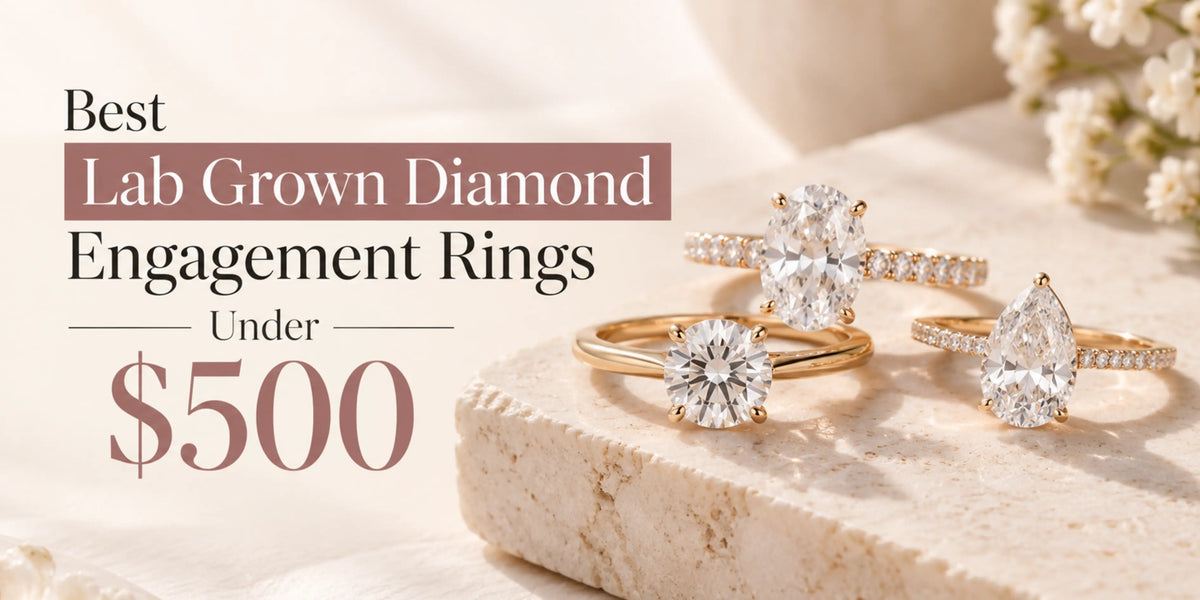
A $500 budget used to mean settling for cubic zirconia or a diamond so small you needed a jeweler's loupe to see it. That math changed once lab-grown diamonds entered the mainstream market. Today $400 to $500 buys a genuine, IGI-certified lab-grown diamond in solid 925 silver, with the same ring available in 14K or 18K gold once your budget grows.
This guide is for shoppers who want a real diamond ring for a proposal, promise, or upgrade - without financing a loan to get one. At this price point, expect a 0.50 carat center stone in D-E color and VVS/VS clarity, set in 925 sterling silver rather than gold, with the option to size up in carat or switch to solid gold later. The ten rings below are pulled directly from GiliBili's engagement ring catalog, each one a genuine sub-$500 listing rather than a gold ring marked down from a higher tier.
At GiliBili, $400 to $460 buys a 0.50 carat, D-E color, VVS/VS clarity lab-grown diamond ring in solid 925 silver with an IGI certificate. The center stone, cut, and setting style matter more than chasing the lowest number, since a well-cut 0.50 carat stone in a secure bypass or bezel setting will out-sparkle a poorly proportioned stone of the same size. All ten rings below ship with IGI certification and can be upgraded to 14K or 18K gold at checkout.
At $400 to $500, expect a 0.50 carat center stone rather than a full carat, set in 925 sterling silver rather than gold. The diamond itself is genuine and lab-grown, not a simulant - the trade-off is metal and size, not authenticity. Across the rings in this guide, color runs D-E and clarity runs VVS to VS, which is a strong grade for a stone this size: eye-clean, with no visible inclusions in normal wear.
Setting styles vary more than you'd expect at this budget. You'll find classic prong solitaires, bezel settings that wrap the stone in a protective metal rim, and bypass or wavy designs where the band curves or splits around the center stone for a more sculptural look. Craftsmanship across the catalog is consistent - mirror-polish finishes, IGI certification, and shank widths in the 1.7mm to 2mm range, which reads as a comfortably slim, everyday-wearable band rather than a bulky statement ring.
Diamond cut. Cut determines how much a diamond sparkles, independent of size. A well-cut 0.50 carat stone will throw more light than a shallow or overly deep cut of the same weight. All ten rings here use IGI-certified lab-grown diamonds, so cut quality is consistent, but shape still changes how the sparkle reads - round and cushion cuts maximize brilliance, while pear and marquise cuts trade some fire for an elongated, finger-flattering silhouette.
Carat weight. At this budget, 0.50 carat is the realistic starting point. Don't assume bigger automatically means better-looking - a smaller, well-cut stone in a flattering setting often reads more impressive than a larger stone with a dull cut.
Color. These rings run D-E, the top of the colorless range. You won't see a difference between D and E with the naked eye; both look ice-white.
Clarity. VVS to VS clarity means any inclusions are microscopic and invisible without magnification. This is a strong clarity grade - you're not compromising here to hit the price point.
Metal. Every ring here is available in 925 sterling silver at the listed starting price, with 14K and 18K gold (yellow, white, or rose) as upgrades. Silver is a legitimate, durable precious metal, but it's softer than gold and will need more frequent polishing to stay bright with daily wear.
Ring setting. Prong settings show off the most light and sparkle but leave the stone's edges more exposed. Bezel settings, like the cushion cut ring in this list, wrap the stone in metal for extra protection - a better fit if you work with your hands often. Bypass and wavy settings add visual interest through the band itself rather than the stone.
Certification. Every ring in this guide ships with an IGI (International Gemological Institute) certificate, which documents the diamond's carat weight, color, clarity, and cut. Always confirm certification is included before buying online - it's your proof of what you're actually getting.
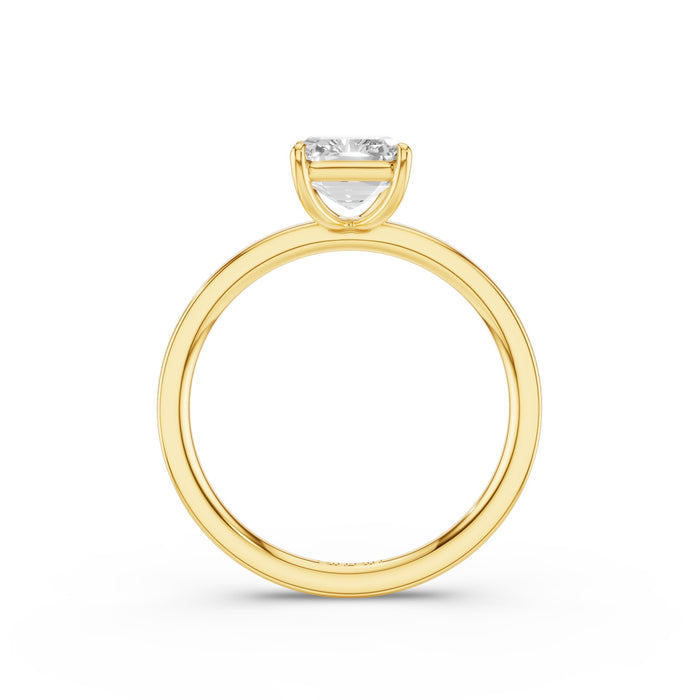
The most classic option on the list - a single radiant-cut stone on a clean band, combining an emerald-style outline with brilliant-cut faceting. It also carries the widest carat range of any ring here, up to 5.00 CT, so the design can grow with your budget later.
Best forShoppers who want a timeless solitaire silhouette with real upgrade headroom.
View Product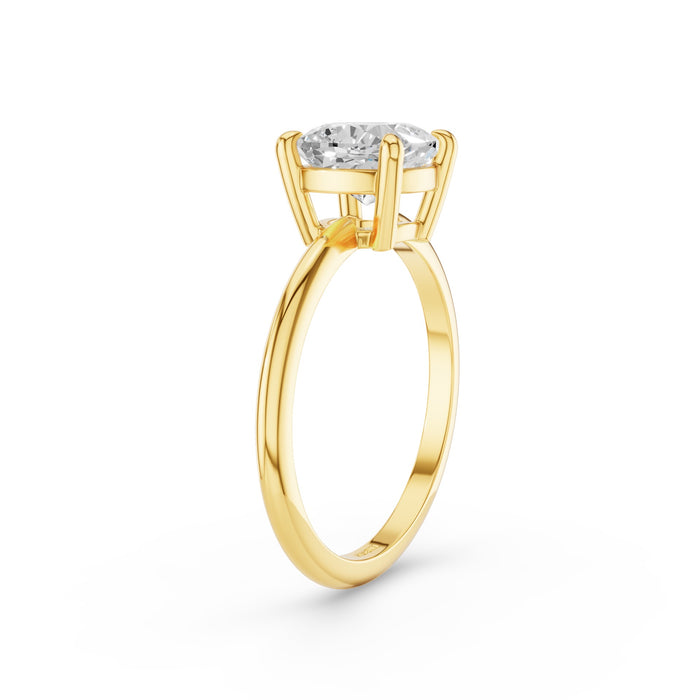
The one ring on this list built specifically for durability. A bezel setting wraps a smooth metal rim around the entire stone, protecting its edges and creating a snag-free profile for daily wear. The cushion cut's soft, rounded corners add a vintage-leaning look.
Best forActive lifestyles, daily manual work, or anyone who's snagged a prong-set ring before.
View Product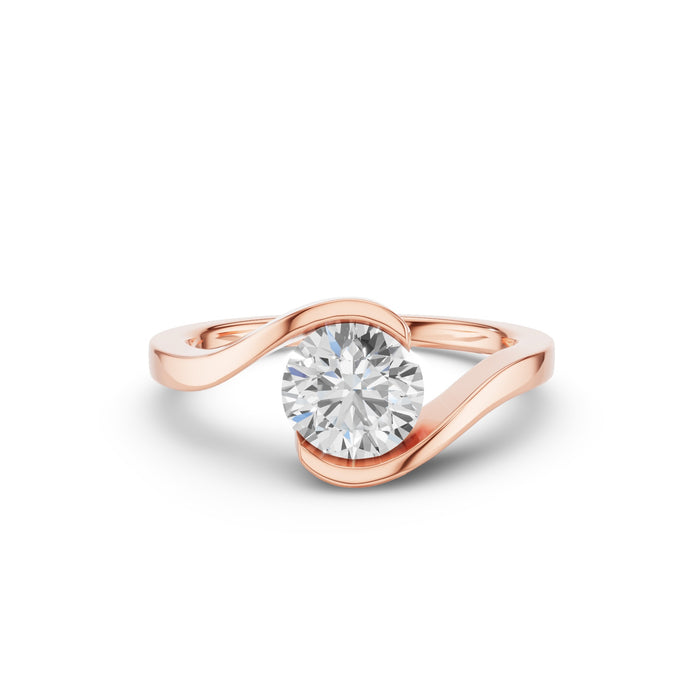
Round brilliant is the most light-efficient diamond shape ever cut, paired here with a bypass band - two flowing lines of metal that curve around the stone instead of meeting in a single shank. It reads more contemporary than a plain round solitaire.
Best forMaximum brilliance from the diamond shape with more visual movement in the band.
View Product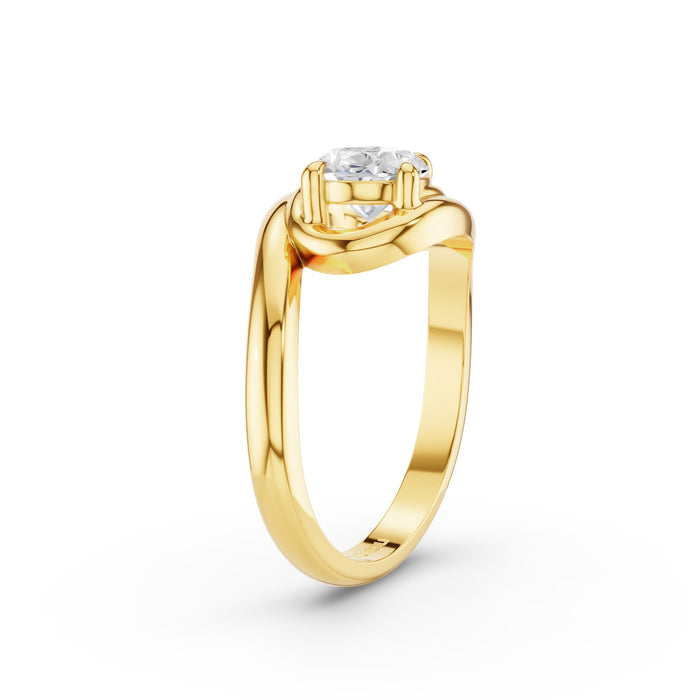
Oval diamonds tend to look larger than round diamonds of the same carat weight thanks to their elongated outline, and this one sits in a twisted bypass band that adds real depth around the stone.
Best forA center stone that visually reads a size up from its actual carat weight.
View Product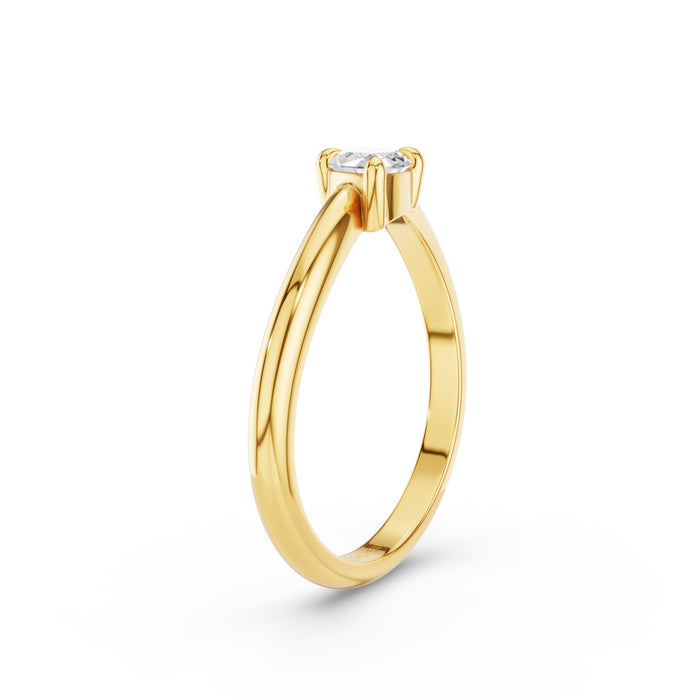
Marquise diamonds have the largest surface-area-to-carat ratio of any shape, so this stone looks larger than its 0.50 carat weight suggests. The wavy band underneath adds a soft, flowing line against the marquise's pointed ends.
Best forStretching your carat weight as far as possible, visually.
View Product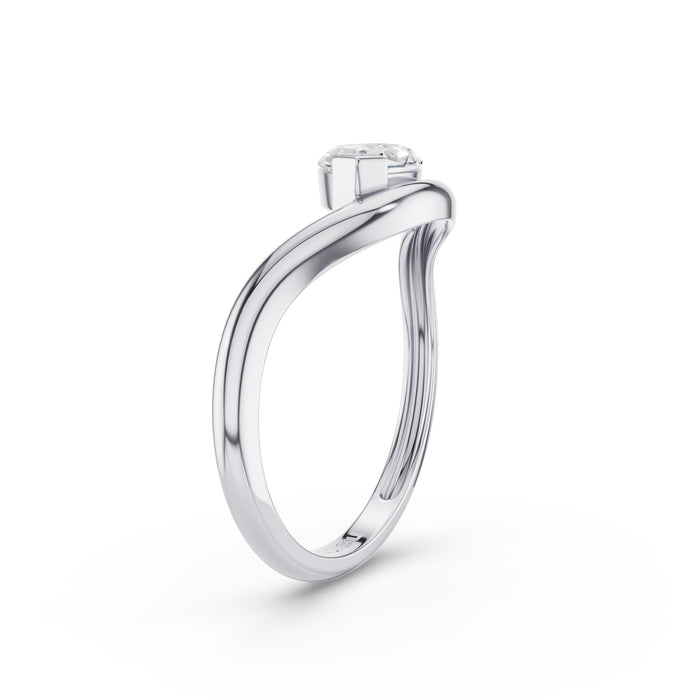
A second marquise option with a slightly different wave pattern and a wider carat ceiling - 2.00 CT versus 1.50 CT above - making it the better pick if you may size up significantly later while keeping the marquise shape.
Best forMarquise fans who want more upgrade headroom.
View Product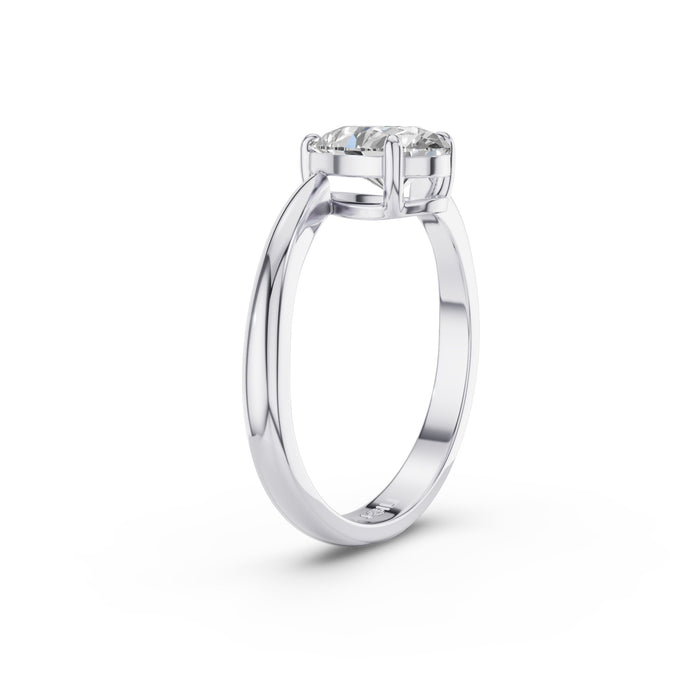
Pear-shaped diamonds combine a round cut's brilliance with a marquise's elongated point, set here in a bypass band whose curved lines wrap around the stone. A grounded entry point into pear shapes.
Best forA first look at pear-shaped stones in a design that still feels classic.
View Product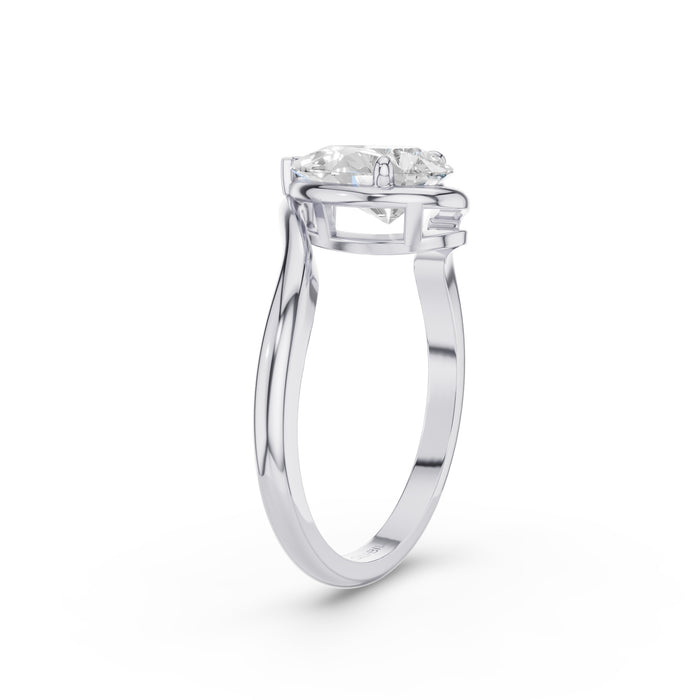
A second pear-shaped bypass option with a slightly wider 1.90mm shank for more presence on the hand, and a sleeker, more contemporary curve to the bypass lines.
Best forA pear-shaped bypass ring with a modern, streamlined feel.
View Product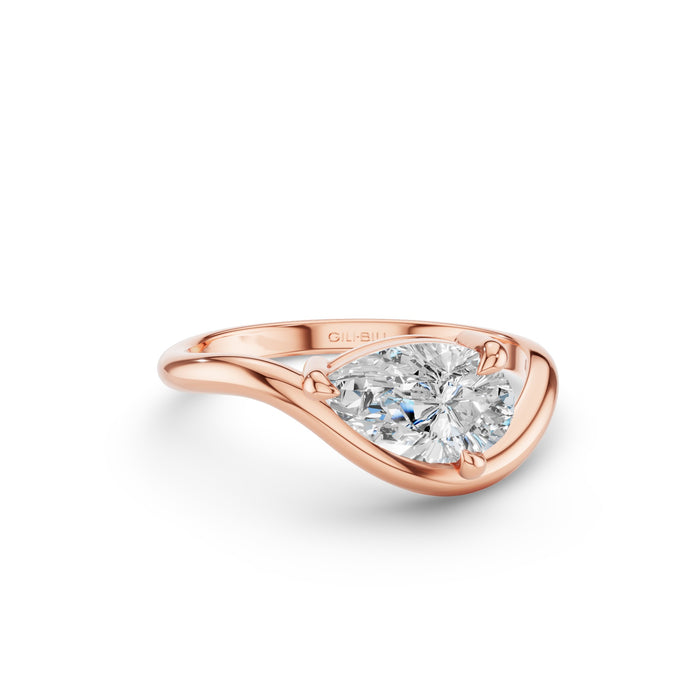
Where the two rings above pair pear with a bypass band, this one pairs the same shape with a flowing wavy band instead - a softer line, and the most affordable of the three pear-shaped rings on this list.
Best forPear-shape lovers who prefer a soft, curved band over a bypass design.
View Product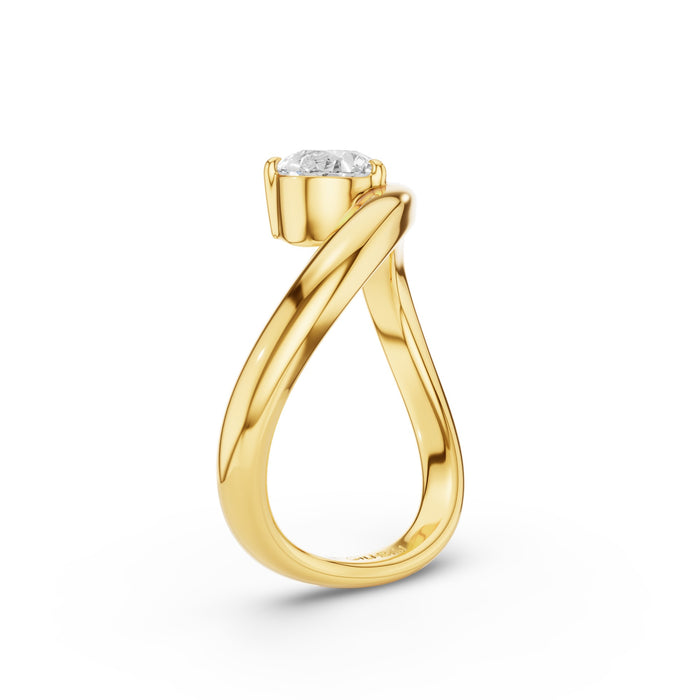
The most expensive ring on this list, and the reason is visible in the band: a bolder, tapered wave design that widens toward the stone, giving it more presence than the other pear-and-wave combination above.
Best forA pear-shaped wave ring with a bolder band profile, closer to the $500 ceiling.
View Product| Ring | Starting Price | Carat Range | Shape | Color | Clarity | Metal (starting) | Setting |
|---|---|---|---|---|---|---|---|
| Radiant Cut Solitaire | $415 | 0.50–5.00 CT | Radiant | D-E | VVS/VS | 925 Silver | Prong |
| Cushion Cut Bezel | $400 | 0.50–5.00 CT | Square Cushion | D-E | VVS/VS | 925 Silver | Bezel |
| Round Bypass | $405 | 0.50–2.00 CT | Round | D-E | VVS/VS | 925 Silver | Bypass |
| Oval Twisted Bypass | $415 | 0.50–2.00 CT | Oval | D-E | VVS/VS | 925 Silver | Prong |
| Marquise Wavy | $400 | 0.50–1.50 CT | Marquise | D-E | VVS/VS | 925 Silver | Prong |
| Marquise Modern Wavy | $400 | 0.50–2.00 CT | Marquise | D-E | VVS/VS | 925 Silver | Wavy band |
| Pear Bypass Prong | $400 | 0.50–2.00 CT | Pear | D-E | VVS/VS | 925 Silver | Prong |
| Pear Modern Bypass | $415 | 0.50–2.00 CT | Pear | D-E | VVS/VS | 925 Silver | Bypass |
| Modern Wavy Pear | $400 | 0.50–2.00 CT | Pear | D-E | VVS/VS | 925 Silver | Prong |
| Pear Wave | $460 | 0.50–2.00 CT | Pear | D-E | VVS/VS | 925 Silver | Prong |
At GiliBili, $500 consistently lands you a 0.50 carat lab-grown diamond in D-E color and VVS/VS clarity, set in 925 silver. That's the realistic anchor point for this budget across every design in this guide. What varies is the setting - bezel, prong, or bypass - and the shape, which changes how large the stone appears rather than how much it costs.
The exact number you land on depends on several stacked variables: the diamond's cut and shape, its color and clarity grade, the setting style, the metal, and the brand's own pricing. A pear or marquise shape will often look larger than a round stone of identical carat weight, purely because of surface area, so shape choice can functionally stretch your budget even when the price stays flat. If you want a full carat or a gold band instead of silver, expect the price to move well past $500 - most of the rings on this list jump to $700–$1,000+ at 1.00 CT, and into four figures once you switch to solid 14K or 18K gold.
For a lot of shoppers, yes - with a clear-eyed view of the trade-offs. A genuine, IGI-certified lab-grown diamond at this price is a real value proposition: the stone itself is chemically identical to a mined diamond of the same grade, and you're not paying for the increasingly outdated markup that mined-diamond pricing still carries.
The compromise is metal and size, not stone quality. 925 silver is a legitimate precious metal, but it's softer and more prone to surface wear than gold, and it will tarnish faster with regular exposure to moisture, lotion, and daily friction. If your priority is a diamond you can point to and say "that's real," this budget delivers. If your priority is a ring you'll wear daily for decades without re-polishing, budgeting toward the 14K or 18K gold versions of these same designs is worth considering once you're ready.
Where this price range works especially well: as a promise ring, an engagement ring for a couple prioritizing savings toward a wedding or home, or a placeholder ring while a custom or upgraded piece is being planned. Where it's worth stretching the budget: if daily durability and long-term wear matter more to you than the upfront number.
Yes. At GiliBili, several designs start at $400–$460 for a 0.50 carat, IGI-certified lab-grown diamond set in 925 silver. The diamond is genuine and lab-grown, not a simulant - the trade-off at this price is metal type and carat size, not authenticity.
Realistically, 0.50 carat. All ten rings in this guide anchor their under-$500 pricing to a 0.50 CT center stone in 925 silver. Moving to a full 1.00 carat typically pushes the price to $650–$800 depending on the design, still in silver.
Yes. Lab-grown diamonds are chemically, physically, and optically identical to mined diamonds - the only difference is that they're grown in a controlled lab environment instead of formed underground. They're graded on the same color, clarity, cut, and carat scale by gemological labs like IGI.
Yes. They're just as hard and durable as mined diamonds, suitable for daily wear, and typically cost significantly less for the same carat, color, and clarity grade - which is exactly why they make a sub-$500 genuine diamond ring possible in the first place.
Not at this quality level. A 1.00 carat, D-E color, VVS/VS clarity lab-grown diamond in silver typically runs $650–$800 across the designs in this guide, and moves well past $1,000 in solid gold. Under $500, 0.50 carat is the realistic ceiling for this color and clarity combination.
There's no universally "best" shape - it depends on what you're optimizing for. Marquise and pear shapes have the largest surface area per carat, so they tend to look bigger than round or cushion cuts of the same weight. Round and cushion cuts maximize brilliance and sparkle. Oval sits in between, with an elongating effect on the finger.
Yes. Every ring in this guide includes an IGI (International Gemological Institute) Diamond Certificate documenting the stone's carat weight, color, clarity, and cut.
A prong setting uses small metal claws to hold the stone, exposing the most surface area to light for maximum sparkle. A bezel setting wraps a smooth metal rim around the stone's edges, offering more protection and a sleeker profile - better suited to active daily wear. A bypass setting uses two curved bands that appear to cross or wrap around the stone, adding visual movement to the design itself.
Confirm the diamond's carat, shape, color, and clarity are stated explicitly on the product page, check that certification (like IGI) is included, review the sizing guide and return policy, and verify the metal type matches what you're expecting to pay for.
For most budget-conscious shoppers, yes. You get a genuine diamond with documented grading at a fraction of the cost of a comparable mined stone. The main consideration is metal choice - 925 silver keeps the price accessible but wears differently than gold over years of daily use.
925 silver is a genuine precious metal and holds a diamond securely, but it's softer than 14K or 18K gold and will tarnish and show wear faster with daily contact. Gold versions of the same designs cost more upfront but require less frequent maintenance over the life of the ring.
Under $500, the honest trade-off is metal and carat size, not the diamond's authenticity - every ring here carries a genuine, IGI-certified lab-grown stone. What separates these ten designs from each other is setting and shape: a bezel-set cushion cut for daily durability, a bypass band for visual movement, a wavy design for something softer, or a classic prong solitaire if you'd rather let the stone speak for itself.
Start by deciding which silhouette actually fits how you or your partner wear jewelry day to day, then use the comparison table above to line up carat range, setting, and starting price before you commit. If you already know you'll want to size up to a full carat or switch to gold down the line, several of these designs - the radiant cut and cushion cut especially - scale all the way up to 5.00 carats, so you're not locked into a redesign later.
Ready to compare all ten side by side?
Browse GiliBili Engagement Rings


